Skip to main content
Senate District 13 (Tigard, Sherwood, Wilsonville)
Courtney Neron Misslin
Democrat
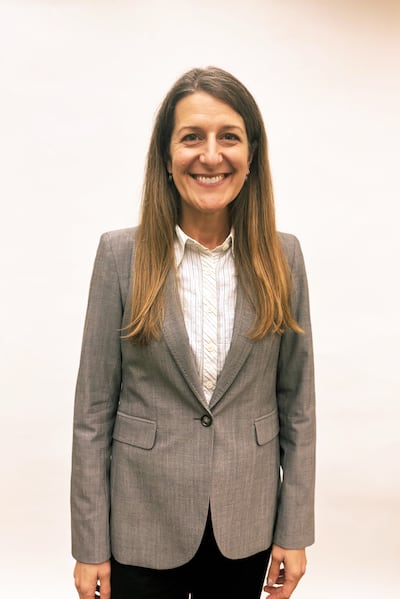
Courtney Neron Misslin thinks members of the Oregon Senate can make real change. This was a point of contention in WW’s endorsement interview with the senator and her Republican opponent, who said as a lone member of the 30-member body he’d be unable to get anything done.
Neron Misslin, 47, represented her hometown of Tigard in the Oregon House from 2019 until last year, when she was appointed to fill the seat of the late Sen. Aaron Woods (D-Wilsonville). She’s now running for a full term repping Senate District 13, which touches Clackamas, Washington and Yamhill counties.
An experienced classroom teacher, Neron Misslin has led education policy in Salem, chairing the House Education Committee and sitting on the House Early Childhood Committee. Early in her career, she helped pass the Student Success Act and she’s gone on to advocate for student mental health support, workforce development and school meal programs. She’s helped secure funding for court-appointed special advocates for youth in the foster care system.
In her opposite corner is Hackettstown, N.J.’s own Glenn Lancaster, 65, retired business owner in the electric utility industry. He says four months into retirement, he ran out of projects around the house and went looking for his next challenge. He’s since run unsuccessfully for statewide office several times. It was not clear to us how he differs with the powers that be in either party, much less his opponent.
Neron Misslin has big goals for our most vexing societal problems—in education, health care and the environment—and she’s demonstrated a willingness to put in the work, despite long odds. She’s the clear choice for District 13.
Neron Misslin’s silliest childhood fear: Bigfoot. Harry and the Hendersons was no laughing matter for her.
Senate District 15 (Hillsboro)
Myrna Muñoz
Democrat
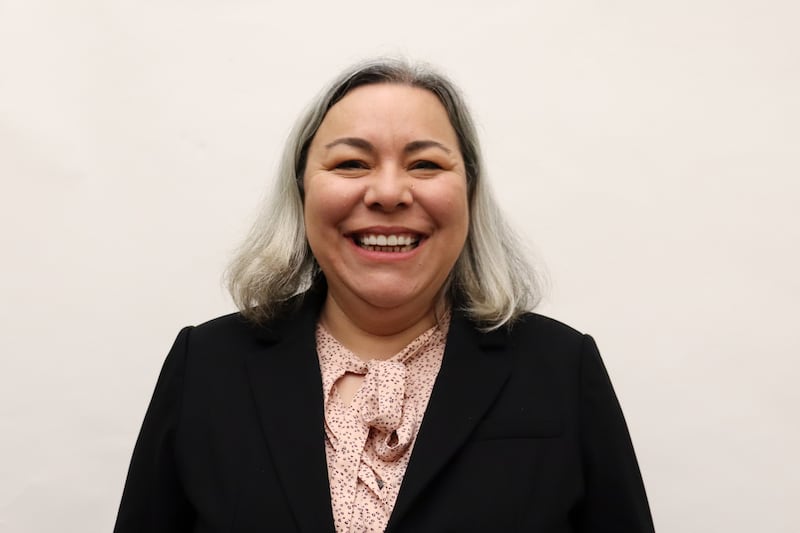
State Sen. Janeen Sollman (D-Hillsboro) represented the Silicon Forest in Salem for eight years, the past four in the upper chamber. She walked into a bear trap last session with several maverick votes that angered influential education, labor and environmental groups. One of those votes—in support of Senate Bill 1586—would have allowed some data center development in rural Washington County.
Those same special interests that for years supported Sollman backed a May primary challenge by Myrna Muñoz, who ran hard on the data center issue. The Forest Grove educator, activist and union organizer championed voter concerns about water quality and rising utility rates while labeling Sollman as a data center hack. The attack was largely a pretext to punish Sollman for crossing teacher unions on strike pay and accountability. But it worked.
Democrats enjoy a near 2-to-1 voter registration advantage in Senate District 15, which includes west and central Washington County. So, since toppling Sollman in the May primary, the race to represent this district has been Muñoz’s to lose. She seems intent on doing just that. She continues to attack Sollman publicly, calling her a “three-headed, fire-breathing dragon” in one instance. When a man was arrested for harassing Sollman and removing her eyeglasses from her head, Muñoz wished him well online and appears to have donated to his legal defense fund.
Muñoz doesn’t seem to appreciate our reporting on her actions. She did not attend WW’s endorsement interview or respond to any of our inquiries. We’d hoped Harold Hutchison might pose more than mere token opposition—that he’d offer a realistic challenge to Muñoz to give voters a choice.
Sadly, he does not.
Hutchison, 72, moved to Oregon in 1963 and has worked a varied career, including stints as a boilermaker and railroad conductor and brakeman and later work in the tech sector at Sequent, IBM, Intel and Revis. He and his wife home-schooled their five children.
His top priority is to end the instruction of health topics he believes are being taught in public schools. Topping this list is anal sex, which he falsely claims is being taught to kids as young as 10. He said doctors who perform abortions are evil. He asked if WW is a newspaper. He had few substantive answers and seemed unprepared.
Muñoz has behaved unprofessionally, and this doesn’t bode well for what could ultimately be a long, strange tenure in the Oregon Senate. But she seems a reliable vote on issues she’s passionate about: civil rights, education and health care. It’s our hope she channels the anger and fear that lifted her primary campaign into substantive policy.
Muñoz’s silliest childhood fear: We could not say.
Senate District 16 (Scappoose, Astoria, Tillamook)
Rachel Armitage
Democrat

For many years, the northwest corner of the state was known for producing three things: timber, cheese and Sen. Betsy Johnson (D-Scappoose), a self-styled helicopter pilot and political iconoclast who enjoyed making life as difficult for her own party as she did for Republicans. She left office in 2021 to make an unsuccessful bid for governor as an independent. Her district suffers for her absence, and Democrats haven’t been able to identify a candidate with the same appeal.
Republican incumbent Sen. Suzanne Weber participated in a 2023 legislative walkout and is barred from seeking reelection. So this year’s contest is between Clatsop County Commissioner Courtney Bangs, a Republican, and Rachel Armitage, who Democrats appointed to Johnson’s seat in 2022 on the condition that she would not seek reelection. (An independent, Melissa Finkle, also seeks the office but provides few specifics.) Bangs didn’t meet with our editorial board, but her platform and track record indicate she is a fierce defender of logging interests and an advocate for parents’ rights in school classrooms.
Having kept her promise and sat out for four years, Armitage now represents the best choice for this seat. A teacher, she has the backing of labor unions while also pledging in the Voters’ Pamphlet to “always protect our God-given rights to hunt, farm and fish.” We loved her answer to a question about how she bucked the Democratic Party: She pointed to her vote against a police reform bill that restricted officers from pulling drivers over on the grounds of a broken headlight or taillight. Her reason? Her district has the most elk and deer in the state, and driving without a headlight “would be very, very dangerous on Highway 30.”
Something about Armitage does put us in mind of deer and headlights, but there’s a nobility to her pluckiness: She went to county fairs and farmers markers with a banner asking voters to “Tell me how you really feel.” We feel she should represent the Coastal Range in Salem.
Armitage’s silliest childhood fear: In kindergarten, she saw her mother dramatically fall to the floor during a dance routine and was terrified.
Senate District 17 (Northwest Portland, Bethany)
Lisa Reynolds
Democrat

Split down the middle by Forest Park, this district contains a portion of Washington County on one side and Northwest Portland and a tiny slice of Cathedral Park on the other. It is presently represented by Lisa Reynolds, a pediatrician—she co-owns The Children’s Clinic on Southwest Barnes Road—who has spent six years in the Oregon Legislature. She began in the House, but got promoted to the Senate in 2024 via an appointment to replace Elizabeth Steiner Hayward when she was elected state treasurer. Now Reynolds, 62, asks voters to send her back for more.
In her way is John Chee. Chee, 41, is a former tech worker with no experience in public office who wants to lower taxes and “cultivate Oregon’s future male leaders.” He was sold on the men’s rights movement, he says, after working in a pro-life clinic in the Bay Area and seeing young men struggle. If elected to the Legislature, Chee says the first thing he would do is deregulate industries employing men so they could thrive.
Reynolds chairs the Senate Committee on Early Childhood and Behavioral Health. Her proudest achievement in office, she said, was passing the 2023 Oregon child tax credit for lower-income families with children under 6. This seems a sound policy, though she acknowledges that, cheery anecdotes aside, there had been little serious analysis of the effect the tax credit was actually having, reflecting a tendency in the Legislature to make laws and then not track outcomes closely. She cites more recent achievements too, including a bill she sponsored requiring private insurers to cover doula care, and another to make local officials put families with kids at the front of the line for scarce affordable housing.
For several years now, a federal survey to measure “flourishing” in kids has ranked Oregon 50th, and the state’s overall mental health outcomes are not much better, suggesting the committee Reynolds chairs has tremendous work to do. If these outcomes persist, questions about Reynolds’ effectiveness will and should mount. But for now, she has shown herself to be a practical leader and a clear communicator. Reynolds is the obvious choice.
Reynolds’ silliest childhood fear: The dark, which sometimes scares her still.
Senate District 19 (Lake Oswego, West Linn, Tualatin)
Rob Wagner
Democrat
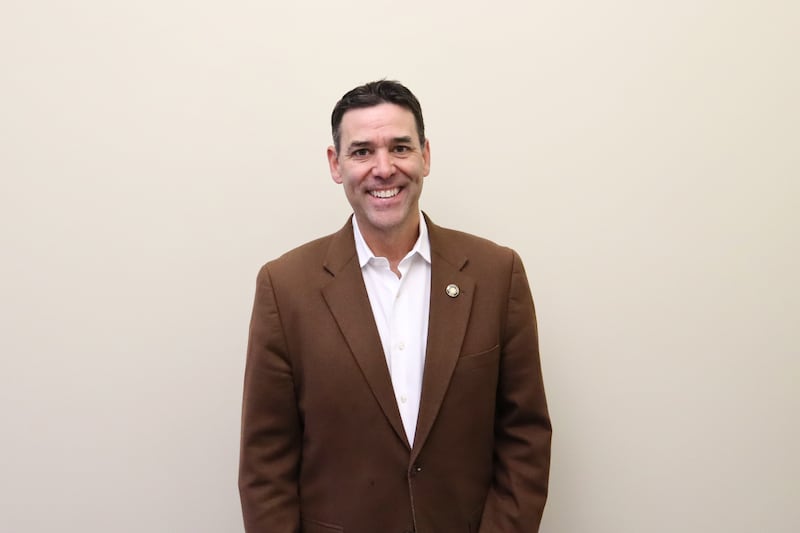
For nearly nine years, state Sen. Rob Wagner has represented Oregon’s wealthiest city, Lake Oswego, along with similarly well-heeled neighborhoods in Tualatin, West Linn and South and Southwest Portland. All those Hydro Hogs guzzling water in Dunthorpe mansions? Those are Wagner’s constituents.
Prior to his appointment to office in 2018, Wagner worked in administration at Portland Community College and, before that, as a lobbyist for the American Federation of Teachers. In 2023, he was selected by his caucus to replace Senate President Peter Courtney (D-Salem), who over two decades earned a reputation as a dealmaker committed to pragmatism and compromise.
Wagner, 53, by contrast, has stepped in it numerous times since assuming the gavel. He angered Republicans with his handling of their walkouts in 2023 and 2026. And he enraged some Democrats last year when, in a last-ditch effort to save an all-important transportation funding bill, he booted a dissident Dem from a committee assignment and claimed the seat for himself. The move backfired severely as several lawmakers dropped their support of House Bill 2025.
At best, the past two legislative sessions represent a missed opportunity. At worst, they were disastrous for a party granted a rare supermajority by voters, and with pressing needs up and down the state budget. As Senate president, Wagner bears more responsibility for these defeats than anyone.
Wagner gets a challenge this cycle from Mary Dirksen. Though green politically, Dirksen, 51, represents an interesting choice if not a prudent one. A career analyst at the Oregon Department of Transportation, she was motivated to run for office by the threat of layoffs at her agency as state funding hovered in limbo. Running in her first campaign, Dirksen says she favors a nonpartisan approach to transportation funding and restoring “balance” to Salem. But her complete lack of electoral and lawmaking experience gives us pause.
Looking ahead, the same issues remain in Oregon: ODOT still stares at a $200 million funding gap and possible deep cuts to services and staff. Wagner defends looking for new revenue sources like a road-use charge to account for electric vehicles and declining gas tax receipts. But he says he could have worked more with legislators one on one to earn their trust. And he thinks he could have tried to accomplish more in the months before a session begins. These seem like rather basic lessons to be learning this long into running the Legislature’s upper chamber. But we aren’t deciding Senate leadership—just this race. In that regard, Wagner is the better choice.
We’ve previously assigned Wagner low marks with the caveat that he was still learning the difficult job of presiding over a motley Senate chamber. As we give him yet another one, we wonder how many second chances he should get.
Wagner’s silliest childhood fear: He slept on his parents’ bedroom floor for two weeks after being allowed to watch the “chest burster” scene in Alien.
Senate District 20 (Happy Valley, GLADSTONE, Oregon City)
Mark Meek
Democrat
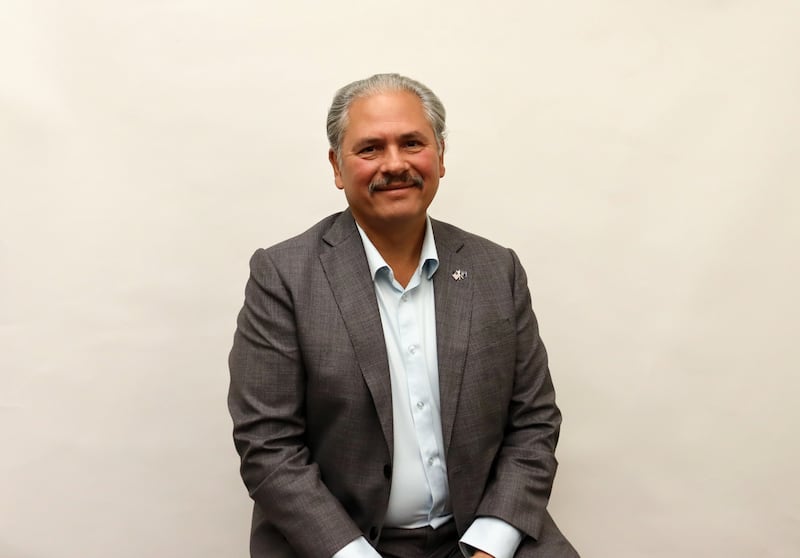
Sen. Mark Meek has been in the Oregon Legislature for nearly 10 years: He represented House District 40 in Salem for six years before edging out a narrow victory over Republican incumbent Bill Kennemer in 2022 to represent this hourglass-shaped Senate district in Clackamas County.
Meek, the owner of two pubs in Southeast Portland during the ’90s, went on to become a real estate agent and held a number of positions in the Clackamas County business sector, including serving as the vice president of governmental affairs for the Portland Metropolitan Association of Realtors.
Meek is a thorn in the side of some of his Democratic colleagues. In 2023, he sponsored a bill that killed the Oregon Department of Transportation’s proposal to toll Interstate 205. Last year, Meek said he’d vote against a $12 billion transportation funding package that required the support of all 18 Democratic state senators to pass. That stance cost Meek his position on the Joint Committee on Transportation Reinvestment and it denied Democrats the package. Lawmakers had to return for an emergency legislative session, where they passed a pared-down, $4.3 billion package.
But Meek proved more in touch with voters than his party’s leadership was: Citizens feeling the pinch in their wallets repealed the compromise package at the ballot. Meek may piss off his Democratic colleagues, but in a state that’s too long suffered from party group-think, we think that’s a good thing.
Meek is running against Republican Michele Stroh, a Oregon City School District board member and small business owner. Stroh did not come into WW’s offices for an endorsement interview, but she says on her website that she was inspired to run for office after the sudden death of her son in 2020 from a pill laced with fentanyl. Since then, she championed a policy passed unanimously by the school board to require that schools keep Narcan on hand and train staff how to administer the overdose-reversal medication. Stroh has done admirable work on the local level, and we think she should continue serving in that capacity. Meek is proving to be a more than sufficient form of loyal opposition.
Meek’s silliest childhood fear: Being left out, which isn’t silly at all.
Senate District 26 (Canby, Sandy, Hood River, The Dalles)
Jeff Helfrich
Republican

After Measure 110 decriminalized drug use in Oregon in 2021—just in time for a fentanyl wave to come crashing across the Western seaboard—former House Republican Minority Leader Jeff Helfrich recalls that some in his party wanted to leave the unpopular Democratic policy intact so they could leverage it on the campaign trail. But he felt the human cost of the policy was too hideous to let stand. He sponsored the Republican version of the reform bill, and played a key role negotiating a bipartisan package that ultimately recriminalized low-level drug possession.
A former Portland Police Bureau sergeant who’s been in and out of Salem for nearly a decade (he lost a couple of races early on and then returned), Helfrich stepped away from formal party leadership when his father died. But his work in Salem went on—he cites, for example, his bill to make liability waivers for ski resorts and other outdoor recreation outfits more enforceable. Now, at 58, Helfrich wants voters in this red-leaning district—bound by the Columbia River and Highway 26—to promote him to Salem’s upper chamber.
Helfrich is a sharp opposition party member, attuned to political pressure points and matters of bipartisan common cause. Not all of his takes that go against the prevailing Oregon grain are good. When discussing climate policy in our endorsement interview, he cited his faith that “the market dictates where good energy comes from”—a statement that is hard to hear with a straight face given that global warming is perhaps the most glaring instance of the market failing to factor in social consequences in human history. But generally his perspectives—say, that Oregon’s Climate Protection Program is uniquely poorly designed, that local communities can find upsides in data centers, that nuclear energy has great untapped potential—will only serve to enrich our most pressing debates.
His opponent, Nicole Bassett, 49, worked for Patagonia and other athletic wear retailers to audit factories for labor and environmental violations before starting an Oregon business of her own based on the concept of circular manufacturing, on which she now advises other firms.
Bassett would be a productive voice for the Oregon economy and environment, but in our interview we got the sense that her run for this seat was driven far more by a desire to take action—to do something—in our ambient horrific national political climate than to advance a vision for Oregon in particular.
We wish Bassett had run for the open seat in House District 52. In this matchup, however, Helfrich is the best choice.
Helfrich’s silliest childhood fear: Choking on popcorn, the vestige of a childhood incident stemming from throwing popcorn in his mouth after a football game. Not so silly!
House District 25 (Tigard, Metzger, South Beaverton)
Ben Bowman
Democrat

At just 34, Ben Bowman has used a safely blue swath of Washington County suburbia as a springboard to the upper echelons of House Democratic leadership. But as another young man with an alliterative name likes to say, with great power comes great responsibility—and as House majority leader, Bowman has encountered the limits of his enormous potential.
The Dem wunderkind bears a share of responsibility for the highway pileup that was Oregon transportation funding—as well as his party tucking its tail between its legs when the funding package wound up on the May ballot. He concedes that leading Democrats failed to align on a scope for the tax proposal, then tried to ram it past Republicans and reluctant members of their own caucus.
Still, Bowman found success in the 2025 long session. He pushed through a bill that limits private equity’s role in Oregon health care—the strongest rules in the nation against corporate profiteering, he says. Bowman says the law has already made a difference for some doctors, restoring jobs and limiting venture capital’s role in independent medical practices. His legislation has become a national model. In the short session, Bowman also led an effort to fully fund Planned Parenthood after H.R. 1 gutted the reproductive health service.
We continue to find Bowman canny and conversant about the state’s most pressing issues. The former school administrator is open to exploring such ideas as reforming collective bargaining and better reining in local control of school curriculum—an increasingly obvious culprit in the struggles of Oregon students to read and count. His vantage from Tigard well places him to identify the ways in which Portland’s civic experiments alienate potential allies in the rest of the state. (He was especially eloquent on how this city’s Rube Goldberg ranked choice voting contraption has reduced the appetite for statewide election reforms.) We noted with admiration his launch of an “outcomes review” program to track whether bills passed by lawmakers achieved any real-world results.
His opponent, Bob Niemeyer, has raised no money and is running, in part, to lead an effort to rewrite Oregon’s constitution. He pitches allowing the eastern part of the state to split off and form its own state. Bowman is learning hard lessons and has our glowing endorsement.
Bowman’s silliest childhood fear: “I think I inherited arachnophobia from my grandmother,” Bowman says. “I’m not going to run out of the room, but if I see a spider and then the spider gets away, it will haunt me for a few hours.”
House District 27 (Beaverton)
Tammy Carpenter
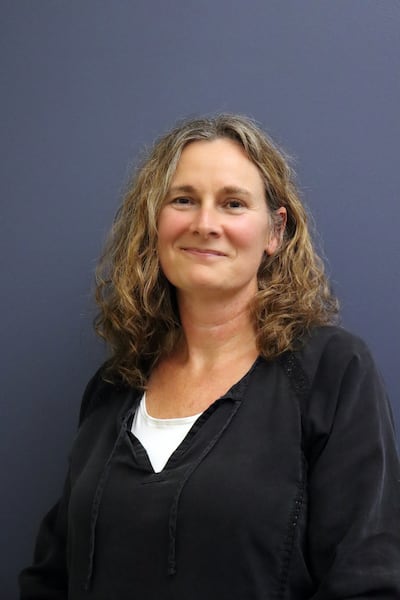
The race to succeed retiring state Rep. Ken Helm in this House district in deep-blue Beaverton pits an anesthesiologist against a veterinarian. This is hardly the only way they differ.
The human doctor, recently retired, is Tammy Carpenter, 56, and she’s running on a left-wing platform centered on workers’ rights and universal health care. After three years on the Beaverton School Board, she ran for the House, backed by the Democratic Socialists of America and some of the state’s most powerful professional unions, and eked out a primary win against a highly qualified Beaverton City Council member who had the support of trade unions and the Democratic establishment.
Now in the general election, Carpenter’s final obstacle is Mark Norman, a 68-year-old Navy veteran who owned a vet clinic for decades before selling it a few years ago to private equity-backed Mission Pet Health. Norman is running to supplant single-party rule in Salem, which he sees as leading to higher taxes, poor school outcomes, unsafe streets, and homelessness. He cites work on the Oregon Veterinary Examining Board and as a director in a district of the Oregon Veterinary Medical Association, but he has never before run for public office.
Carpenter’s politics better match her district, and we give her the nod, though with the caveat that she could well end up as another lawmaker in the pocket of unions that tend to conflate—sometimes inaccurately—their own interest with the public’s. At one point in our endorsement interview, Carpenter recalled being excited to use her school board post to push for science of reading curriculum, and seeking from the teachers union “buy-in that I should be saying this”—only to be told that not all in the union were on board. She clarified she wasn’t asking for the union’s permission but taking its pulse, and she merely adjusted her strategy when she saw some in the union weren’t ready.
As in the primary, when we endorsed her, Carpenter demonstrated a thoughtful bent that allayed our concerns about her independence. As she seeks to champion an audacious and politically challenging plan to bring single-payer health care to Oregon—a vision that is at once radical and, in the context of the developed world, utterly banal—the task before Carpenter will be to get more moderate minds on board with very, very big ideas. Voters should give her a shot.
Carpenter’s silliest childhood fear: That the front door was unlocked when she, a latchkey kid, was at home with her sister.
House District 28 (Southwest Portland, Beaverton)
Dacia Grayber
Democrat
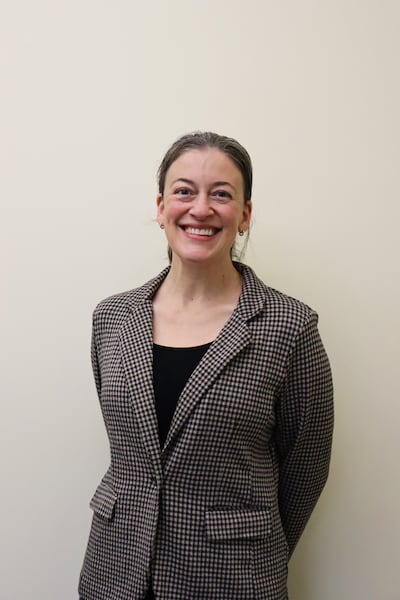
Some of Portland’s best hill walks wind through Dacia Grayber’s district: the 4T Trail Loop on Pill Hill, the towering firs of Hoyt Arboretum, and the picnic paradise of Gabriel Park in Multnomah Village. In the big houses that surround these parklands, love wins. (It’s a comfortably blue district.) Grayber’s served here for three terms, and we think she’s the clear choice for a fourth.
Grayber, 51, has worked as a firefighter for about 25 years, many of them with Tualatin Valley Fire & Rescue, which means she’s been a union member nearly half her life. Organized labor counts her as a reliable ally in Salem. That was especially clear from her chief sponsoring what was perhaps the Oregon Legislature’s most controversial bill of its 2025 long session, Senate Bill 916. The bill made Oregon the first state in the nation that requires all employers, public and private, to pay unemployment benefits when their workers strike. Grayber names the passage of SB 916 her proudest accomplishment of the biennium.
Was it a good idea? It certainly scandalized the chattering classes and alarmed school districts, which prophesied long strikes by teachers with less motivation to bargain. We’ll know soon enough. But so far, SB 916 has not doomed the public employers who vehemently opposed it. (In the most notable test case, Portland Community College spent a total of $260,000 compensating striking faculty members, much less than the $1.45 million it anticipated spending every week.) And Grayber did place some guardrails on the legislation, like a cap on the number of weeks striking workers could access unemployment, and other parameters to ensure the bill wouldn’t threaten the unemployment insurance fund. At any rate, Grayber says her focus next session will be on workforce development and easing burdens on small businesses.
Grayber’s opponent, Randall Fryer, is a former emergency room and family medicine physician who retired in 2024. Fryer, 73, is running on a platform of fiscal conservatism. He was eager to eliminate many state taxes, but struggled to name services he’d cut. The only concrete example he offered was eliminating the Oregon Health Plan’s coverage of gender-affirming surgery. As Grayber rightly pointed out, that’s not a meaningful proportion of Oregon’s health care spending. Stick with Grayber.
Grayber’s silliest childhood fear: She had a recurring nightmare in which she was being chased by a giant ball of yarn. “We can psychoanalyze that,” she says. “I’m not a great knitter.”
House District 29 (Hillsboro, Cornelius, Forest Grove)
Brian Schimmel
Republican/Independent

Rep. Susan McLain is seeking a seventh term representing the farms and suburbs of western Washington County. The former schoolteacher and debate coach earns high marks for courage. This newspaper royally scorched her in the May primary, suggesting voters select an undistinguished challenger just to get rid of her, and still McLain returned to our office “to try and convince you that that was the wrong answer.”
Unfortunately, she didn’t. We maintain that McLain, 77, is the primary architect of the legislative failure to build consensus around a tax and fee package to stabilize transportation budgets in the past two sessions. She’s the chair of the House Transportation Committee, which meant she was running point on a bill that could keep highways plowed without fomenting a taxpayer rebellion. She dropped the ball twice: first by failing to get a funding bill across the finish line in the 2025 long session, and then by crafting a compromise in a special session that voters swiftly rejected at the ballot box. Remember, this disaster was the top priority of a party that held supermajorities in both chambers.
We wish McLain’s only shortcoming was that she can’t pinpoint what went wrong. It’s worse: She doesn’t acknowledge that anything did go wrong. The Legislature passed a bill, she says, so the process wasn’t a failure. This is a lower standard than we would set for a Subway sandwich artist, who is expected to actually give you a sandwich, not just make it. And it gives us little faith in McLain’s ability to further shepherd either transportation funding or the Interstate 5 bridge, another committee she chairs. The cost of that project has more than doubled, from $6 billion to $13 billion, and McLain says it too is going well.
We’re tired of trying to get McLain’s attention. So is Brian Schimmel, a member of the Independent Party of Oregon who also received the Republican nomination for this seat. A city councilor in Forest Grove with a long track record of public service in Washington County, Schimmel, 56, was spurred to seek this seat when he called McLain with complaints that legislation to protect schools from ICE agents had proven largely performative and toothless. He found her response dismissive and hostile. (She doesn’t recall it that way.) Schimmel, whose work experience includes both dairy farming and Intel, would be a serious candidate even if the incumbent were on top of her game. He’s gathered endorsements from the mayors of Hillsboro, Forest Grove and Cornelius, which suggests McLain has lost touch with her district. Vote for Schimmel.
Schimmel’s silliest childhood fear: He nearly drowned after falling into a tank of cow manure and feared bodies of liquefied material ever since.
House District 31 (Scappoose, St. Helens, Banks)
Tom Forest
Democrat
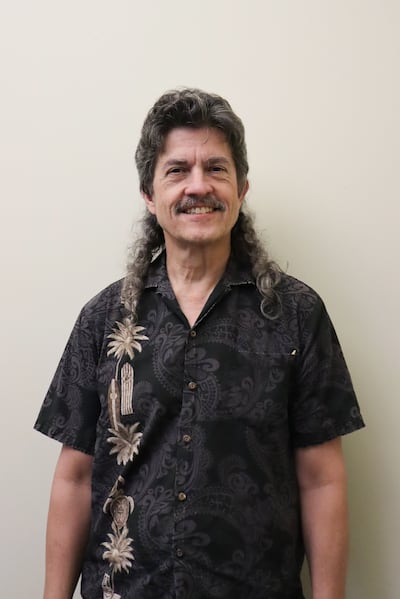
Nearly 400 people sleep homeless in Columbia County on any given night, according to state data. This might come as news to Tom Forest, who told us homelessness doesn’t really exist in House District 31, which encompasses Columbia County and parts of rural Washington and Multnomah counties. “It’s not a big issue in this district,” the Democratic candidate tells us. “And it’s not an issue that I’ve researched.”
On this issue, Forest’s opponent, incumbent state Rep. Darcey Edwards (R-Banks), is more the adult in the room. Drawing on the experience of a son struggling with drug use, she’s passionate about the issues of addiction, recovery and homelessness, and is favorably positioned now as vice chair of the House Interim Committee on Behavioral Health.
Edwards, 57, first won election in 2024, motivated to run by the loss of a lumber mill in her hometown of Banks and an accompanying 70 fewer jobs in the local economy. A real estate agent, Edwards talks often about managed growth and updating antiquated state land use codes.
Republicans have the registration edge in this race—but only by a little over 2,000 voters in a district with 25 times that many. So it’s not inconceivable the Dems could pick up her seat. Earlier this year, Forest, 56, responded to an open call from local party officials seeking a warm body to oppose Edwards in November. An MIT-trained software engineer, Forest wants to address state budget holes caused by the federal H.R. 1.
With his STEM background, he can discuss the science of climate change down to the concentration ratio of various carbon isotopes. Edwards, on the other hand, likens the human-caused rise in the earth’s average temperature to evolution. “One hundred years ago,” she says, “we had different weather than we do today.”
Pivotal to a fairly hostile contest is Edwards’ outraged accusation that Forest is lying about her on his campaign website. To our eye, many of Forest’s characterizations of Edwards on his website appear to fall within the bounds of acceptable political commentary. More discrediting is how Edwards claims she doesn’t recall if she voted for Trump in 2016 or 2024.
We’re left with a question of what’s more disqualifying: Forest’s blindness to societal ills that impact his district, or Edwards’ refusal to acknowledge whom she voted for and what his actions are doing to the planet. We give the edge—quite narrowly, it should be said—to Forest, who has the potential to learn on the job. Neither choice is optimal, but Edwards’ politics are too closely aligned with the darkness emanating from D.C. for us to stomach.
Forest’s silliest childhood fear: He still fears the taste of pickled beets.
House District 33 (Northwest and Southwest Portland)
Shannon Isadore
Democrat
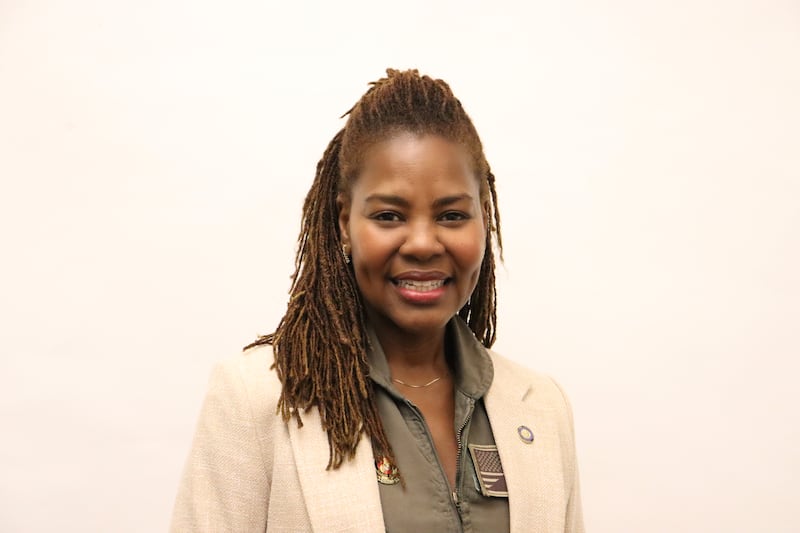
House District 33 encompasses Northwest Portland plus much of downtown—if developer Jeff Swickard is buying it, Shannon Isadore represents it. (Plus, it’s home to WW World Headquarters in Slabtown!) In 2024, Isadore triumphed in a competitive Democratic primary to succeed Rep. Maxine Dexter seat after Dexter successfully catapulted to the U.S. House of Representatives.
Isadore, 56, was born and raised in the Albina neighborhood, then went on to serve in the U.S. Marine Corps, earn a degree in family psychotherapy, and start a behavioral health center. Her experience running the Oregon Change Clinic—an addiction treatment facility with temporary housing services—is especially valuable at this moment in Portland. And she moved the clinic downtown, which both makes logistical sense and strengthens a bond with her constituents.
Isadore is the vice chair of the House Economic Development, Small Business, and Trade Committee. One of her proudest accomplishments in her first term, she says, was securing $10 million of state lottery money for the James Beard Public Market downtown.
Isadore’s Republican challenger is Ciatta Thompson, whose name might be familiar to voters from her failed run for Portland City Council in 2024.
Thompson, 47, is a manager at a downtown hotel who started running for office to help find solutions for the rampant addiction, crime and despair she sees as part of her day job. WW endorsed her City Council bid two years ago; since then, Thompson departed from the board of the Multnomah County Democrats, switched political parties, and began inveighing on social media against sanctuary cities and gender-affirming care for minors. We’re not sure whether we entirely misjudged Thompson two years ago or she got red-pilled since then.
Either way, her case is instructive: Every so often, one of the “pragmatists” who rail in Portland web forums against communism lets the mask slip and declares common cause with MAGA. They should not get lumped in with business-friendly Democrats—in this case, Thompson is running against one.
Isadore has capably represented District 33 for two years and ought to have two more.
Isadore’s silliest childhood fear: “Ventroliquism. My brother had one and there was a little talking mouth…” She shuddered.
House District 36 (Hillsboro, Beaverton)
Hai Pham
Democrat

House District 36 lies entirely within Washington County, including west Beaverton, south Hillsboro and unincorporated areas. Democrats outnumber Republicans here by a nearly 2-to-1 ratio, and since 2022 the district has been represented by Hai Pham, a pediatric dentist.
Pham, 47, and his family came to Oregon as refugees after the Vietnam War when he was a year old, and he is now a married father of a 3- and 5-year-old in Hillsboro. His health legislation wins in Salem have made life demonstrably better for kids: In the recent short session, Pham sponsored a bill to stop the online sale of counterfeit car seats, which passed and will go into effect Jan. 1. He also introduced a bill to cover cochlear implants for children that passed in 2023.
Pham has served as the chair of the House Interim Committee on Behavioral Health starting last session. He was unable (or perhaps unwilling) to provide much specificity about the Oregon Health Authority’s challenges and why Oregon has such poor mental health outcomes when compared with other states. We’re hoping his imprecision stems from being a relative newcomer to the Behavioral Health Committee and his confidence on the topic will improve.
His Republican challenger is Michael Orth, 71, a retired small business owner seeking office for the first time. He lives and works on his hazelnut farm in unincorporated Washington County. Orth is running on a platform of lower taxes, fuller support of law enforcement, and education initiatives such as more classroom hours, school choice and “protecting girls sports,” he says.
Given Pham’s experience, education and track record in Salem, voters should feel comfortable giving him a third term.
Pham’s silliest childhood fear: “Freddy Krueger. A Nightmare on Elm Street. I was terrified of that guy.”
House District 37 (Tualatin, West Linn)
Jules Walters
Democrat
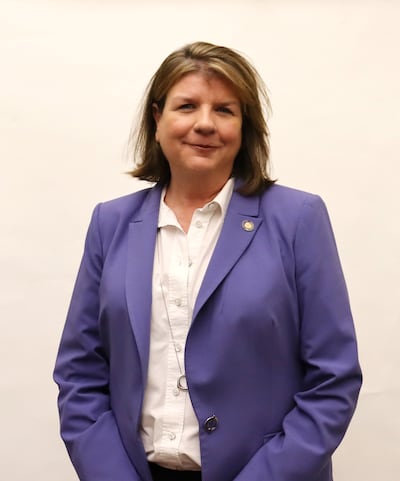
Since Jules Walters arrived in Salem after stints as the mayor and a city councilor for West Linn, the former baker and cook has achieved notable legislative clout. A vice chair of the House Revenue Committee, she reformed the transient lodging tax (which taxes hotel and Airbnb stays) with a measure that gives governments more flexibility in spending the proceeds. She says she’s looking into changes to Oregon’s long-standing rules restricting property tax increases, which in her telling lead to inequitable outcomes—next-door neighbors paying dramatically different taxes depending on when they bought—and school districts using janky, ad hoc bond measures to raise cash.
Walters, 55, also chairs the committee on early childhood. In this realm, she touts work on a bill that defined drug and alcohol use prevention—an abstract achievement perhaps, but one she says lays groundwork for her next bill, which would supply schools with an anti-alcohol and drug campaign (think D.A.R.E. recast for modern times).
Her opponent is Chad Parker, a chipper video producer who hustled his way in L.A. to a job at Nickelodeon before starting his own production company. Parker has appeared in these pages before; he organized the production of a stay-at-home ad campaign about an Oregon park ranger adjusting to life indoors—a project that, in his telling, became a model for how video production could continue safely in the pandemic.
This was a formative time for Parker, now 48. He and his wife served for a year as vice presidents in the parent teacher organization at River Grove Elementary, the only official public service experience he cited. He’s running for office now because he says he personally knows business owners and high earners leaving the area due to high tax and regulatory burden, and he thinks the state needs to court business more aggressively.
Parker is a good communicator who was pleasantly hard to put in a box—he’s a Nikki Haley Republican who wants more money for public schools—but he lacked concrete proposals, substantive evidence to support his claims, or the political experience to win an endorsement over a well-respected incumbent, who can trace a meaningful body of work in Salem. Vote Walters.
Walters’ silliest childhood fear: “Aside from nuclear war, my fear was that Jaws was going to come up through the drain in the deep end of my swimming pool.”
House District 40 (Gladstone, Johnson City, Oregon City)
Michael Sugar
Democrat

Rep. Annessa Hartman has represented this district for two terms, but is vacating her seat after a personally tumultuous year. (She announced she would leave the Legislature to run for the Clackamas County Board of Commissioners. Shortly after that, she was diagnosed with stage 3 cervical cancer and ended her bid for that race. Hartman is now cancer free.) The Clackamas County towns lining the east bank of the Willamette River are culturally purple, and Republicans tend to shave points off Democrats’ voter registration advantage.
Adam Baker gave Hartman a close contest in 2022, and he’s back for another run this cycle. Baker, a real estate agent and former police officer, is stumping on affordability, along with a commitment to funding public safety.
Defending the seat for Democrats is Michael Sugar, a high school history and civics teacher in the West Linn–Wilsonville School District. (Sugar has in previous years held leadership in its teachers union.) In spring, we gave our endorsement to Sugar’s primary opponent, health care policy wonk Charles Gallia, who offered more specifics. Voters didn’t agree with us: Sugar won handily.
When Sugar, 35, came back for a second interview in October, we found his vision much more honed. He’s in the minority of his own party that wants to see taxes cut, with a particular focus on making the Corporate Activities Tax more friendly to small businesses. And, as a public employee who’s at times worked three jobs to qualify for a home loan, he’s close to the heart of the many affordability concerns Oregonians face.
We found several of Sugar’s takes on education refreshing. When asked why student outcomes have continued to lag, he pointed out that the state is unique in how unstable school staffing is year to year. Shuffling educators every fall, he argues, means Oregon loses a tremendous amount of momentum to a lack of consistency.
Baker’s no slouch, but we found it significant that Sugar got the endorsements of all three mayors in the district, the chamber of commerce, and several prominent unions. We’ll add our name to that list.
Sugar’s silliest childhood fear: Public speaking.
House District 41 (Milwaukie)
Mark Gamba
Democrat

Mark Gamba, green energy advocate and urbanist stalwart of the Oregon left, seeks reelection to a deep-blue district that centers on Milwaukie, extending up into Southeast Portland and down into Oak Grove.
He took this job repping the district in 2023 after a decade on the Milwaukie City Council—including a long portion as mayor—in which he laid the groundwork for denser development. In the coming legislative term, he wants to redouble his focus on Oregon’s aging and inadequate transmission line system, which he pegs as a central culprit for the state’s anemic green energy build-out. His bill to stand up a centralized state transmission authority failed in the past—victim, he says to lawmaker wariness of bold solutions. But similar measures have passed elsewhere in the American West, and he thinks he can get the bill done next term.
First, though, he must vanquish a familiar foe: Elvis Clark, 72, a retired utility economist who has run several times for Milwaukie City Council and state representative on a platform of stopping new taxes. Clark strikes a pleasant, cerebral tone. He has wonky ripostes to Gamba’s tax policy assertions. When Clark spoke in favor of natural gas, the duo got into a brief technical debate over methane emissions that we won’t litigate here.
Clark is correct that Gamba wants to raise taxes; Gamba’s position is that a libertarian ethos in Oregon has placed structural limits on the government’s ability to effectively raise revenue, leading to a scarcity mindset in state agencies that in turn struggle to deliver on their mandates, a toxic cycle. It’s an argument that will sound off-key to many constituents floored by rising costs on all fronts. Like many of his Democratic colleagues, Gamba should more aggressively seek out the places where the “mission creep” that Clark describes in state government is real.
Still, a more administratively simplified, muscular government would, in fact, be a productive engine for better lives, and Gamba is a serious champion for this cause. The people of Oregon House District 41 should send him back to Salem.
Gamba’s silliest childhood fear: He remembers no fears!
House District 42 (Southeast Portland)
Rob Nosse
Democrat

House District 42 covers a deep-blue cluster of inner Southeast Portland neighborhoods.
Rob Nosse has adeptly represented them since 2014. A charmer with clear answers and a mean necktie game, Nosse, 58, moved to Oregon in 1992 to be a student activist. He then worked as a union representative, first for Service Employees International Union and then at the Oregon Nurses Association, before running for office.
With his deep experience in health care policy from chairing the House Health Care Committee, Salem can’t lose Nosse’s knowledge now. If elected for another term, Nosse will likely oversee the unenviable task of dealing with $421 million in cuts to Medicaid due to the federal H.R. 1. His greatest accomplishment this term, he says, was in health care access: keeping Bay Area Hospital in Coos Bay open. (His greatest disappointment was not making progress in preventing toxic algae blooms in Ross Island Lagoon.)
Nosse’s challenger this election cycle is Libertarian Morey Straus, 57, who lives in Creston-Kenilworth and works in information security. Straus was well-spoken but holds political views that are just too out there, such as the abolition of Medicaid, gun laws, and rules and structure in education.
Nosse is the clear choice in this race.
Nosse’s silliest childhood fear: “I was deathly afraid of getting hit by a baseball when I had to get up and swing a bat.”
House District 43 (Northeast Portland)
Tawna Sanchez
Democrat
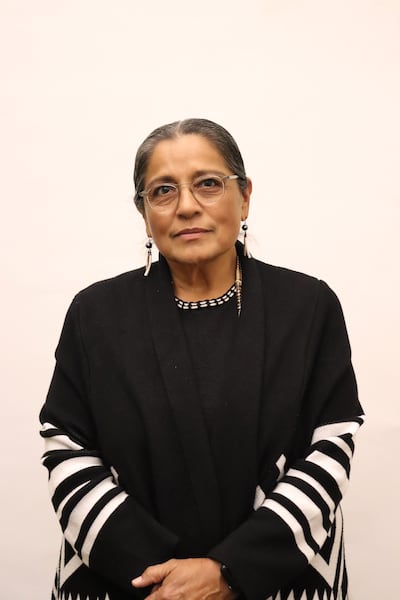
As co-chair of the Joint Ways and Means Committee, Rep. Tawna Sanchez—whose district encompasses much of Northeast Portland—is one of the Legislature’s most powerful Democrats. Now seeking her sixth term in the House, Sanchez, 65, spends little time drafting bills. Asked about her proudest accomplishment, she said it was coming out of the last biennium with a balanced budget. “I don’t get to do a whole lot of policy,” she says.
In the last biennium, Sanchez’s most notable bill proposal died in committee in 2025. In an attempt to challenge Oregon’s powerful alcohol lobby, she pushed for a sales tax on beer, wine and hard cider whose proceeds would have been directed toward alcohol abuse prevention for minors. She tells us she’s still committed to passing some version of the bill, but sees it wrapped up in a broader conversation on revenue reform in Oregon. As she says, tiny taxes won’t cut it anymore.
Sanchez, one of the first Native Americans to serve in the Legislature, is about to be at the forefront of one of the most difficult legislative sessions in recent memory around the state budget, largely thanks to cuts from H.R. 1.
On new taxes, we found Sanchez measured and reasonable, even as she laid out controversial proposals. As she sees it, it would do Oregon good to implement a sales tax to benefit from tourism. To grow appetite for the proposal at the ballot box, she proposes lowering the state’s personal income tax to give Oregonians choices on how to spend their dollars. And we respect that Sanchez, under significant pressure from local school districts, refused to tap a rainy-day fund for schools known as the Education Stability Fund, citing worse times ahead.
We still don’t think Sanchez has adequately grappled with the root causes of Oregon’s dreadful student outcomes, and we wonder why the representative, whose day job is director of family services at the Native American Youth and Family Center, repeatedly fails to identify a state delivering mental health services better than Oregon.
Still, Sanchez is the most qualified candidate for this seat. Her opponent, retired Marine Tim LeMaster, has mounted unserious challenges to Sanchez’s seat over several election cycles. LeMaster, 53, is frustrated by what he describes as “one-party domination” in the Capitol, and says the state’s high taxes have driven out small businesses and made Oregon unaffordable for many. He’s raised no money for his campaign and says he’s just running to give people an option. We’ll stick with Sanchez.
Sanchez’s silliest childhood fear: “Maybe heights.”
House District 48 (East Portland, Happy Valley)
Lamar Wise
Democrat
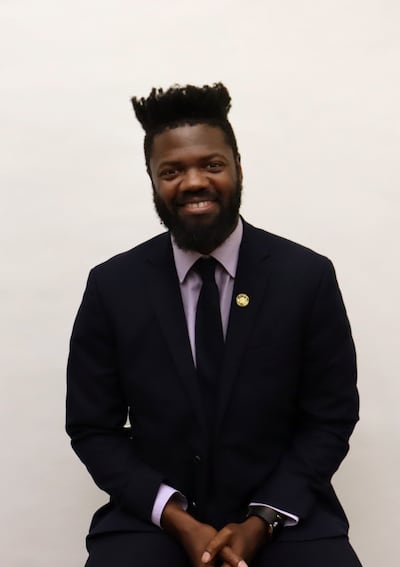
This district includes the easternmost part of Multnomah County and much of Clackamas County, including the suburbs of Happy Valley, Damascus and Boring. It’s a swing district, narrowly won by Rep. Hoa Nguyễn in 2022 and 2024.
Nguyễn, a groundbreaking Vietnamese American lawmaker, died tragically young: just 41 years old when she succumbed to cancer. She left an open seat, and lawmakers selected Lamar Wise to fill it. Prior to his appointment, he’d spent six years in leadership positions at Oregon AFSCME, the largest and arguably most powerful labor union in the state, representing 40,000 health care, child care and nonprofit workers. Most recently, Wise, 35, served as the union’s political director.
Our endorsement of Wise to a full term is lukewarm at best. He hasn’t done much in the Legislature worth noting and could articulate few criticisms of his own party; that’s disappointing, given that the state is struggling on almost nearly every front. Wise’s greatest accomplishment in the House so far has been to win passage of a bill that requires school districts to report absenteeism data every quarter rather than annually. When we asked what specifically he hopes that data will tell state legislators and what he plans to do to decrease absenteeism across the state, he struggled to answer.
Two additional factors make us wary. Wise twice sought appointment to vacated legislative seats before he was finally appointed late last year to House District 48—that strikes us as opportunistic. And just last week, the Oregon Government Ethics Commission unanimously voted to investigate Wise over allegations he failed to disclose income he received from a nonprofit group on his annual statement of economic interest, which all elected officials must file, and also failed to report communications with AFSCME lobbyists. Wise has said it was an honest mistake and has since corrected his disclosure.
So we don’t have much enthusiasm for Wise—just trepidation about his Republican challenger, Andrew Morrison.
Morrison, 44, is a tech executive who co-owns two small businesses in Damascus with his wife. He’s certainly been involved in his community: He served on the Gresham Area Chamber of Commerce for four years and chaired the finance committee for the city of Damascus before residents voted to unincorporate in 2016. But he seemed unbothered by rising income inequality and more concerned about the small number of Oregonians abusing government-funded programs than the fact that the Trump administration is systematically fraying the social safety net. Morrison has his own campaign finance red flag—his largest donor is the wife of a prominent former fuel executive convicted of raping a 13-year-old girl—but our greater concern is his arrogant dismissal of people struggling to get by.
Wise isn’t a great choice. But he’s better than Morrison.
Wise’s silliest childhood fear: He was afraid of the dark, but now he has a nightlight.
House District 49 (Troutdale, Parkrose, Gresham)
Zach Hudson
Democrat

Zach Hudson has represented Northeast Multnomah County in some form for a decade. The soft-spoken substitute teacher spent four years on the Troutdale City Council before getting elected to the Oregon House in 2020 to represent this blue-leaning district, which stretches from the Sandy River to Portland’s city limits.
Hudson, 47, chairs the House Education Committee at a heady time; the state, which posts abysmal reading scores, is trying to exert more centralized control over local school districts. In this space, he touts himself as a practical operator, citing, for example, his experience moderating between school district and parent interests to smooth the implementation of rules intended to provide more classroom time for kids with special needs.
Challenging him is Ann Walker, 62, a forestry and business consultant whose outspoken ways inspired the Multnomah County Republican party to ask her to run. She has no experience in elected office—she recalled making an unsuccessful attempt decades ago for the Maupin School Board—and she’s running for a ramble of reasons: crime, lowering taxes, and perhaps most punchily, dissatisfaction with the quality of Oregon education. Another reason she is running is personal. She says the landlord of her floating home community has been jacking up the rent far too much for her taste, and she feels her state representative has been little help.
Hudson didn’t wow us, but he made a persuasive case that he is in fact attuned to the needs of his constituents, and correctly pointed out that it is Democrats like him who tend to favor rent caps. Walker speaks to real frustrations many parents have with their lack of voice in their children’s education, but she failed to articulate a coherent fresh vision on schools, land use, and other key issues for her district that would remotely justify taking out a competent and experienced incumbent. Go with Hudson.
Hudson’s silliest childhood fear: Speaking in front of a class.
House District 51 (Canby, Estacada, Sandy)
Darla Mead
Democrat
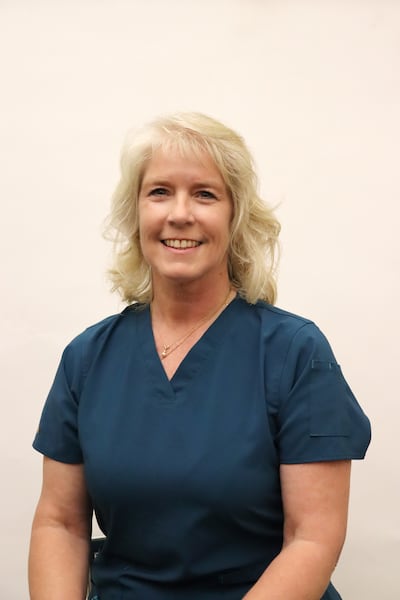
Christine Drazan represented this rural Clackamas County district, but when she got appointed to the state Senate in 2025, local officials tapped an amicable insurance broker and civic leader named Matt Bunch to take her place.
Bunch, 67, took the reins days before the bill-filing deadline, so we won’t hold it against him that he doesn’t have much to show for the short legislative session. Lawmaker colleagues describe him as serious, respectful, and eager to learn, and he touts his work getting funding for a Japanese beetle-trapping program to help state agriculture interests keep a key certification. His campaign has a socially conservative bent we don’t share, but it’s not out of place in the conservative-leaning community he represents.
Fortunately for the residents of District 51, a quality incumbent has a quality competitor. Darla Mead, 60, worked in customer service and accounting before returning to school in 2009, leading to a fresh act as an oncology nurse at Oregon Health & Science University with leadership roles in her union.
Asked why she seeks this seat, she says: “I am perpetually frustrated with the inability of my cancer patients to get what they need.” She describes horrific choices patients and providers alike face in a deeply broken system. She has other concerns too—for one, about the style of growth brewing in her rural district on the border of urban life. She laments, for example, a recent development that turned a hayfield into a gated community of million-dollar homes she feels few in the district could afford.
This issue highlights a key contrast. Both are wary of outsider encroachment. Mead wants the state to take a heavier hand, with funding and incentives to encourage development that can produce homes priced within the median-income range. Bunch favors a state government that makes strategic investments in things like infrastructure but generally stays out of the way, leaving it to local officials to attempt to shape their world.
Mead’s campaign has been plainly outraised—the Democrats put resources where they think they can win—but she can claim serious endorsements and has a bolder, more compelling vision for the structural role Salem could play in improving the lives of her neighbors and her patients. Give her a shot.
Mead’s silliest childhood fear: Vampires. She slept with covers up close to her chin for protection. She says she no longer has this fear.
House District 52 (Hood River, The Dalles, Government Camp)
Scott Hege
Republican

Follow Interstate 84 through Gresham into the Columbia River Gorge and you’ll find yourself in the heart of District 52: Cascade Locks, Hood River, The Dalles and the national forests and ski slopes along Mount Hood. Your favorite waterfall is in this district; so is your least favorite data center. Rep. Jeff Helfrich (R-Hood River) has represented this district for two terms, and is now seeking to advance to the Senate.
Democrats actually hold a slim voter registration advantage in this district, so Helfrich’s move has them eyeing this seat as one they can flip to maintain the supermajority necessary to pass taxes without bipartisan support. But we are recommending voters stick with a Republican—not because of the larger chessboard, but because of the differing quality of the candidates.
That Republican is Scott Hege, a 16-year Wasco County commissioner who has lived in the district for 35 years and showed a strong understanding of his constituents and how their needs differ from those of the Portlanders who weekend in the Gorge.
Hege, 64, served as executive director of the Port of the Dalles from 1991 to 2005. He joined the Wasco County Board of Commissioners in 2011 and has served on the body since. Since 2008, he has also run a construction and project management firm. He joined the Wasco County Board of Commissioners in 2011.
We don’t love everything about Hege—particularly his wishy-washy support of President Trump and that he’s pro-life. But we think endorsing his opponent, the 25-year-old Hank Sanders, would be doing a disservice to the constituents of District 52. Sanders has lived in the district for just a little over a year, and when we asked him why he chose this homestead, his answer didn’t demonstrate much care for the place: He was working on a political campaign there at the time he decided to run for office.
Sanders did a few short gigs in journalism (including hosting a podcast for WW in 2021 and 2022) before turning his eye toward politics. He has money and access few candidates enjoy: His mother is state Rep. Lisa Reynolds (D-Portland) and his father, Dr. Dave Sanders, founded the medical clinic chain ZoomCare. In the year prior to his run, he was working as a legislative aide to—you guessed it—his mom.
In our endorsement interview, Sanders spent more time repeating Democratic talking points and attacking Hege with petty digs than he did talking about what his district needs. He focused on the harmful impacts of data centers and talked a big game on affordability and increasing housing production, but he could not provide any specifics of how he thinks the state should address these issues.
Hege, by contrast, has a strong grasp on his district’s needs, and having a Republican voice in the Legislature that has deep knowledge of the industries and economics that buoy his district is a better bet than a slick Democratic scion who repeats party lines with little substance. Vote for Hege.
Hege’s silliest childhood fear: He couldn’t think of one, but he did say he sleepwalked as a child.
See the rest of Willamette Week’s Fall 2026 Endorsements here!