Skip to main content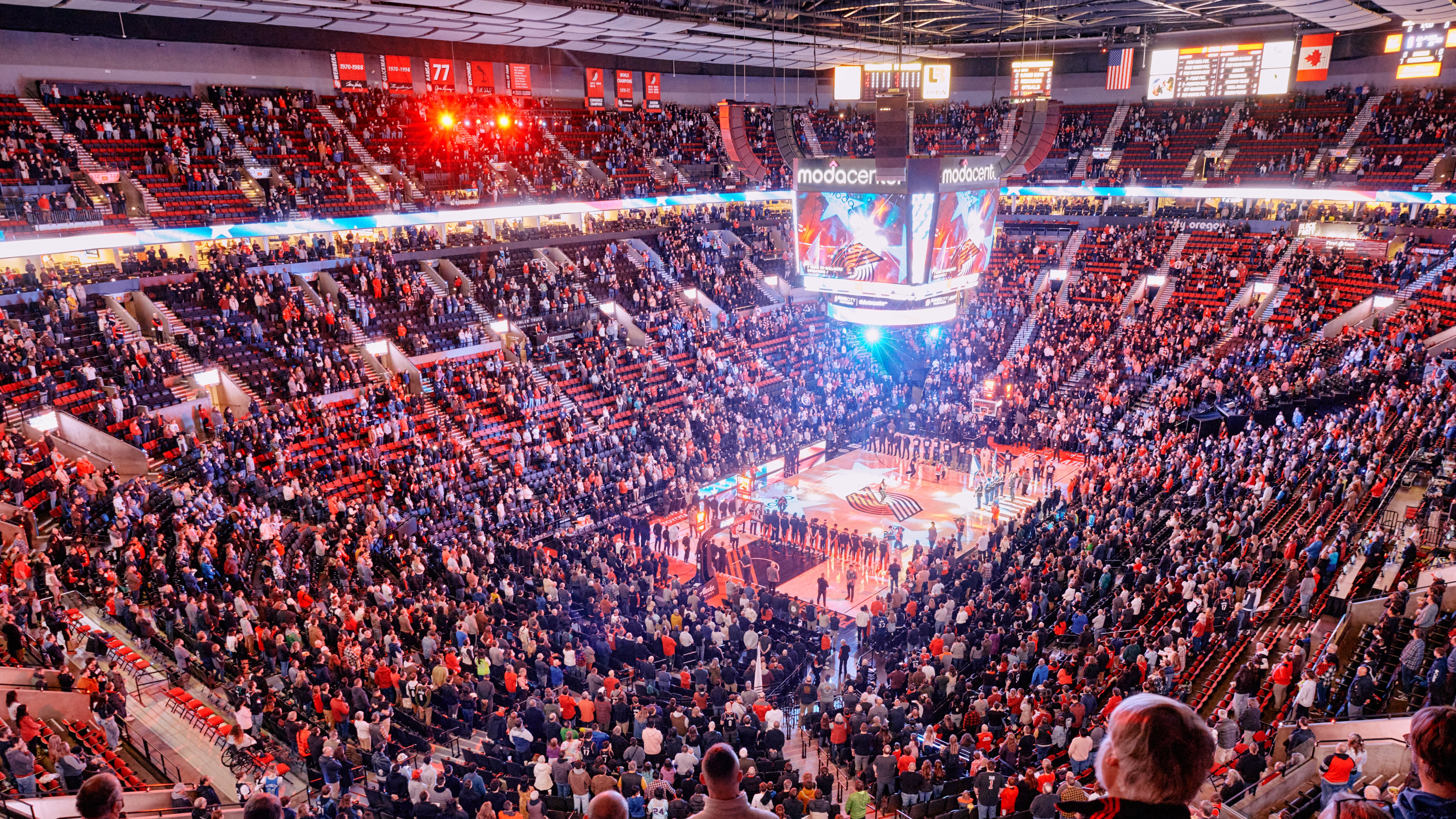
A frosty public meeting between city officials and Trail Blazers executives on Thursday offered little in the way of progress toward a Moda Center renovation deal that would guarantee the team stays in Portland.
Blazers reps told the Portland City Council and Mayor Keith Wilson that the “threat of litigation” posed by a provision in the team’s current bridge lease with the city, allowing the city to sue for money to maintain the arena as a “first-class” facility if the team relocates, is stalling negotiations.
“The first-class standard has been wielded as a weapon, chilling our negotiations,” Trail Blazers president of business operations Dewayne Hankins said during the meeting at City Hall. “The city must acknowledge that the arena is and remains in first-class condition. Doing so removes the threat of litigation hanging over these negotiations so that our conversations can move forward.”
The Blazers’ insistence that the first-class provision be removed if the city wishes to sign a long-term lease with the Blazers to keep them in town was met with frustration by city officials, who are upset at the Blazers’ refusal to offer specifics of the estimated $600 million arena renovation.
Team reps confirmed as much: If the first-class provision isn’t struck, the Blazers will offer little information about what the city’s $120 million upfront public investment would buy.
“Without that critical first step, it’s obvious that negotiations are compromised knowing that information shared during these negotiations can’t be unheard, can’t be unseen, and could potentially be used in litigation against us,” said Hankins, who called the first-class standard a “relic” that’s atypical in most NBA deals.
But that’s created something of a catch-22: Unless Portland removes a financial obstacle to Blazers owner Tom Dundon decamping to another city, the Blazers won’t share information that could persuade the council to approve a deal to root them here.
The City Council must approve a preliminary term sheet for the deal by Aug. 12, but has until the end of the year to ratify a longer-term lease with the team.
Councilors peppered the team’s leaders on Thursday for any details they could possibly offer about the scope of the renovation. But the team kept coming back with a common refrain: As long as this first-class provision remains in the bridge agreement, the team won’t share anything.
Mayor Wilson, whose administrative team is leading the negotiations between the city and the Blazers, said the city is not pondering litigation. “We are not contemplating suing the Blazers, Rip City, or other parties,” Wilson said firmly. He took issue with the Blazers’ demand to remove the provision from the bridge agreement, saying: “There is simply no good reason to amend those agreements unless and until we reach a new long-term lease and commitment.”
The stilted meeting comes after months of discussion between the city and the team to negotiate a $600 million Moda Center renovation and a new 20-year arena lease. Dundon has made clear he’s not interested in putting any of his own money into the renovation. (Some observers believe Dundon is in fact looking for a way out of Portland and is seeking to sabotage relations with the city so he can negotiate with another city that will pony up more public subsidy and has a tax system more favorable to the wealthy.)
People familiar with the matter say Dundon has maintained regular contact by phone with people in Wilson’s administration, even as the team has balked at more formal conversations.
Members of the Portland City Council initially balked at Wilson’s proposal to use Portland Clean Energy Fund dollars for the city’s $120 million city contribution to the renovation, but as weeks of increasingly sour negotiations have limped along, the councilors’ list of gripes has grown bigger than just the funding source and the amount of public investment requested of them. They’re now also miffed at the dearth of renovation details and Dundon’s refusal to pitch in financially so that Portland taxpayers—already feeling overtaxed—aren’t the only ones ponying up.
A term sheet released by the mayor’s office earlier this month displeased both the City Council and the Blazers, both of whom said they’d had little input on the product and that it seemed more of a PR move than a genuine attempt to negotiate. During Thursday’s meeting, Hankins aired the team’s grievances with that term sheet, saying it included “more than 20 material departures from the state’s language in Senate Bill 1501.” (That was the Oregon Legislature funding package that delivered $365 million toward the arena overhaul.)
“It also adds hundreds of millions of dollars in extra costs that we hadn’t discussed in the conversations we had, creating further team deficit,” Hankins said. “No team would sign a lease that would keep this team in the red for 20 years.”
Blazers executives spoke with the council for just an hour before leaving the three-hour meeting. They made one thing clear: So long as the first-class provision remains in the bridge lease, the Blazers aren’t interested in a longer lease.
“A vote on Aug. 12 gets us no closer to a deal unless that vote fixes the bridge agreement,” Hankins said.
Kristen Dennis, one of the city’s top negotiators on the deal, urged the council to pass at least some version of a term sheet on Aug. 12—even if councilors are displeased with it—so the city can keep negotiating into the fall and unlock more details from the Blazers. She urged them to view it as a starting point, not as a binding document.
“It’s going to need to be thinner now based on the limited information we have,” Dennis said. “But it’s still an important first step, and I’m optimistic we can get to a 20-year long-term lease by the end of the year.”