Skip to main content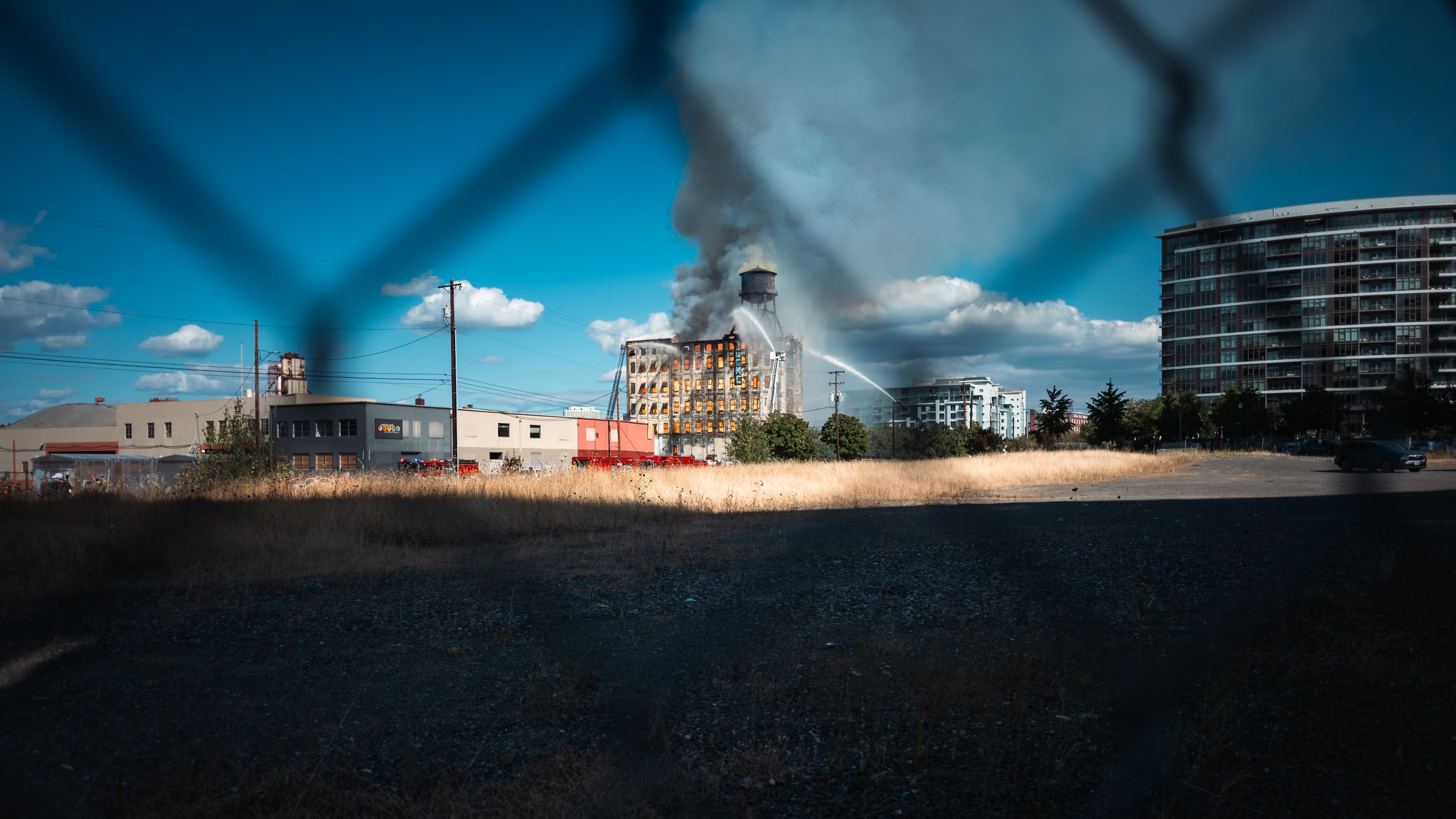
After defying the city of Portland by rolling freight trains past the badly damaged Centennial Mills building in the Pearl District, Union Pacific is allegedly violating an agreement not to run toxic chemicals through the unstable structure’s collapse zone. That allegation was leveled by Portland’s city administrator in an Aug. 11 letter.
The eight-story, 116-year-old Centennial Mills building—gutted in a massive blaze Aug. 2—remains highly unstable and could collapse at any time. Public safety officials have closed Northwest Naito Parkway near the building, established a safety zone 150 feet in every direction, and given the building owner until Friday to begin demolition.
It further asked two railroad companies to temporarily cease running trains near the long-vacant structure. But on Monday, UP resumed freight rail operations, giving several written assurances and an engineering assessment supporting its decision. Among those assurances: that UP would not transport certain toxic materials through the affected corridor until at least Aug. 21.
But according to Portland City Administrator Raymond C. Lee III on Tuesday morning, Union Pacific moved 13 railcars containing residual chlorine through the Naito corridor. The city raised concerns at a meeting with UP later that day, according to a letter by Lee, who called the railroad’s actions “unacceptable.”
“Our objective is to prevent catastrophic harm while an unstable structure remains directly adjacent to active rail lines,” Lee writes. “A single rail car at 5% residual volume may contain approximately 1,500 gallons of chlorine, and a release of that magnitude would produce a hazardous plume requiring immediate emergency response and posing a severe threat to nearby residents, workers, and the surrounding community.”
Lee told the railroad that city workers outside the building report they can feel the vibrations of passing UP trains and worry it could trigger a collapse.
In its written response to the city, Union Pacific neither confirmed nor denied running trains containing toxic chemicals.
Union Pacific spokeswoman Robynn Tysver tells WW the railroad is using extra safety precautions while waiting on the city to provide its own demolition plan. She outlined several safety measures implemented by UP, including reducing train speeds to 10 mph near the building, placing stationary loaded ballast cars on the eastern track, and deploying hazardous materials response personnel to the site.
“Public safety remains our highest priority, and we continue to communicate transparently and collaborate closely with the city and emergency response agencies,” Tysver writes. “We respectfully but urgently request that the city provide a demolition plan and schedule for the Centennial Mills structure without delay.”
BNSF also uses the tracks near Centennial Mills in partnership with Amtrak, which operates more than a dozen passenger trains through the corridor. Amtrak continues to bus passengers between Portland and Seattle.
Earlier this week, police dogs detected the possible scent of human remains inside the burned-out building.
Across the Willamette River, Union Pacific has angered many with its operations on the Central Eastside, regularly tying up traffic at several intersections for hours at a time near its Brooklyn Intermodal Rail Yard.
UP is now pursuing a merger with Norfolk Southern, a move projected to increase rail operations on the Central Eastside by 22%, according to Union Pacific.