Skip to main content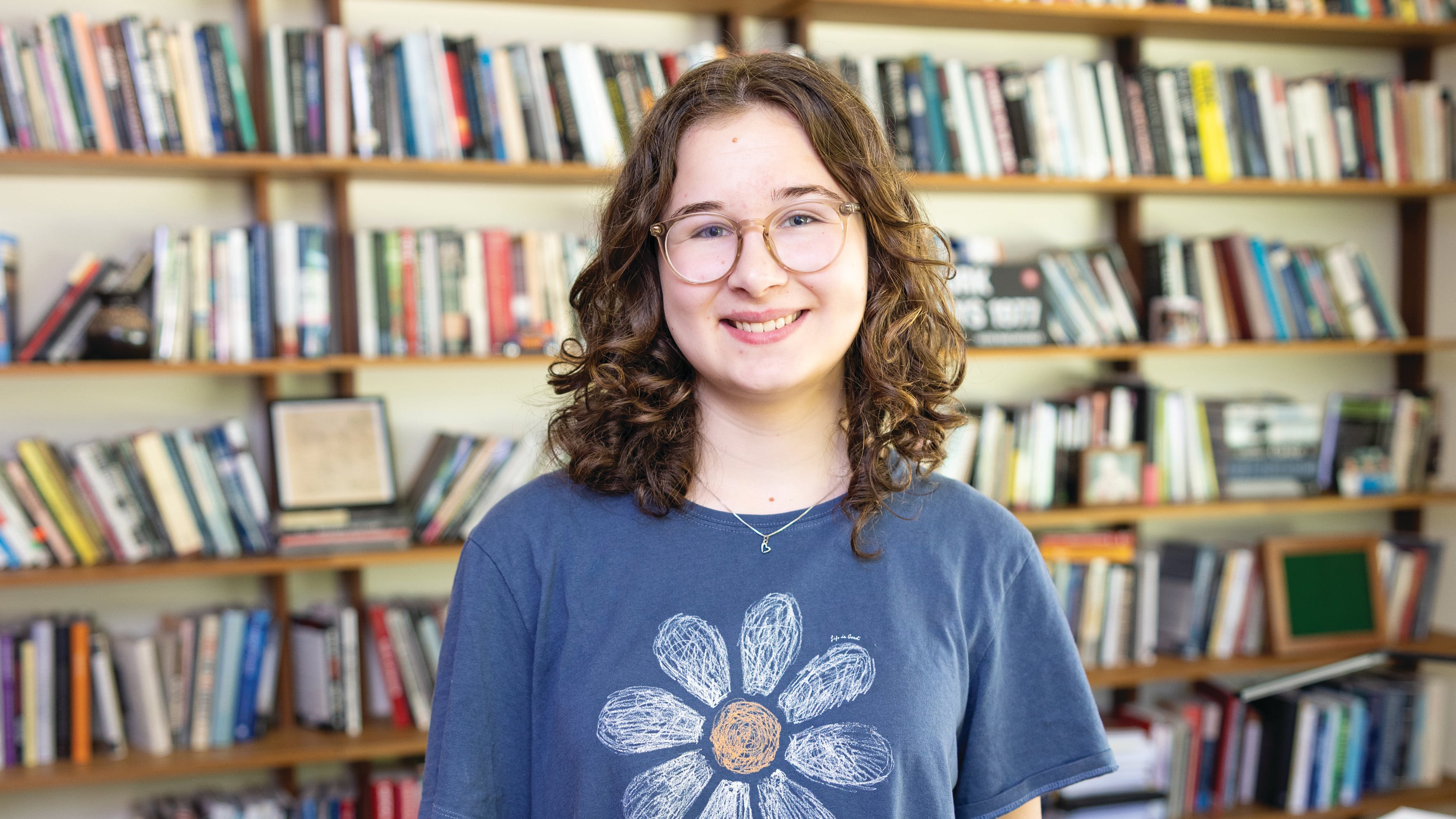
Alma Valls’ first encounter with artificial intelligence in the classroom went fine. In her freshman year English class at Cleveland High School, Valls typed her academic goals into a software program, and the algorithm spat out suggestions to make them more specific.
Like many other students, Valls had no problem using AI. After all, technology had been a part of her education for a while. During the COVID-19 pandemic, her middle school sent her home with a Chromebook, which she used to complete online assignments and conduct Google searches. So playing around with ChatGPT and using it to help summarize confusing readings or tricky concepts in school was a logical next step.
But it took a conversation with a friend for Valls to see that her AI use might have been antithetical to her values. That friend asked her two years ago why she used AI when research indicated such software could be damaging to the climate. That’s when she started digging.
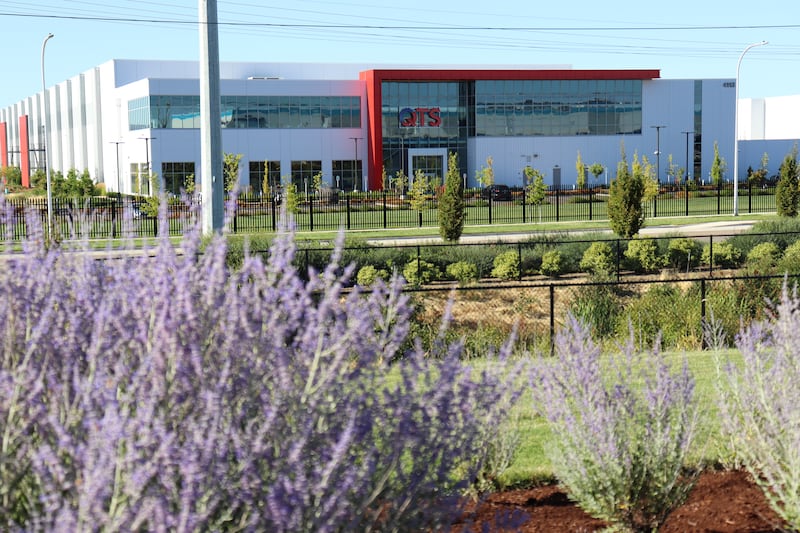
Valls, now a rising senior and the president of Cleveland’s environmental club, has seen the research. Generative AI requires intensive electricity and water consumption to train and power models. A 2026 United Nations report suggests that if the data centers used to power AI were considered a country, they would rank 11th globally in electricity consumption. Environmental impacts hit close to home: Google’s data centers in The Dalles consumed nearly 550 million gallons of water in 2025, according to reporting by The Oregonian, nearly 40% of the entire city’s water use.
“I was really confused, and I hadn’t realized the environmental effects of AI,” says Valls. “Being in friend groups and in a school that’s very progressive on climate shifts has caused me to know more about it, and be more anti-AI, and I’m definitely hearing other people concerned about it.”
And when Valls became one of two student representatives on the Climate Crisis Response Committee, a nine-member oversight group to monitor how Portland Public Schools keeps its commitment to reducing carbon emissions, she noticed a loophole large enough to drive a Prime delivery van through.
The Climate Crisis Response Policy, which the Portland School Board adopted in 2022, aims to cut the district’s emissions during the 2018–19 school year in half by 2030, and hit net zero emissions by 2040. (So far, it’s on track to do so.) The policy is one of the most progressive in the nation: It explicitly prohibits the installation of fossil fuel infrastructure in new buildings and promises to procure products and services while taking climate into consideration. It’s also supposed to guide the district’s climate education curriculum, helping prepare students to embrace more sustainable practices in their lives.
For PPS officials and members of the School Board, the climate policy is something to brag about. “The district wanted to be aggressive and ambitious in creating a climate policy that would be transformational,” Superintendent Dr. Kimberlee Armstrong told WW in April. “We have one of the most ambitious K–12 climate policies, definitely on the West Coast, and probably in the country.”
But the policy passed well before the explosive rise of AI, and therefore offers no guidance for how the district should navigate such software.
That gap bothers educators, parents, and students like Valls. And Valls isn’t alone in her anti-AI views. Ian Ritorto, a just-graduated Roosevelt High School senior who served for the past year as the School Board’s student representative, tells WW that PPS’s student body feels “overwhelmingly negative” about AI. Ritorto says when bringing up AI’s use in classrooms to fellow students and teachers, almost all express a level of outrage.
At a June 23 School Board meeting, the Climate Crisis Response Committee delivered a recommendation suggesting AI use in the classroom be limited “as much as possible,” and that PPS publicly track, monitor and codify district AI use. It also proposes that any AI use in classes should be accompanied by education about its environmental impact.
The committee joins a growing movement within PPS urging the School Board and district officials to take action on AI use. And though the district has opted not to renew its two generative AI contracts, community members want more. The district, they say, must figure out how to actively confront an ever-changing technology, rather than reacting later.
“It felt like the welcoming of AI into PPS was a foregone conclusion, and that the goal was really just to get folks on board and to feel comfortable using these tools,” says CCRC chair Alyssa Koomas, a PPS parent. “[We should] make sure that we’re stopping and that everybody is engaged in that conversation.”
Isaac Rudiger, an incoming Cleveland High School senior, says most of his friends are against the use of AI in their classes—mainly because of environmental concerns.
“For a long time, the PPS School Board was doing really well, climatewise, and taking steps forward,” Rudiger says. “And then this kind of feels like a step back. And as a student, that kind of sucks.”
Indeed, the School Board has long been cautious to sink its teeth into AI policy. In September, a contracted legal adviser for PPS said the technology’s rapidly developing nature puts it at odds with the deliberative policymaking that the board often employs.
Meanwhile, PPS dipped its toes in the water. During the 2025–26 academic year, the district crafted an AI guidebook, which it released in April. It offered staff guidance on how to enhance work with generative AI, and students were encouraged to seek instructor guidance on whether they could use AI on specific assignments. While it outlined some risks, it noted many school districts were “thoughtfully engaging with AI’s potential” and that PPS hoped to prepare students for an “AI-powered future.” Parents, educators and some members of the School Board worried that loose guidance on the use of AI could deprive students of critical thinking skills.
PPS also experimented with two pilot literacy softwares this past year, Amira Learning and Lumi Story AI. (The contracts for those pilots cost $5,160 and $149,000, respectively.) Superintendent Armstrong has said the district is not engaged in any AI contracts in the upcoming 2026–27 school year, and that the two pilots will not continue.
“Right now, there’s no generative AI or AI product that we have in Portland Public Schools that’s moving forward in the fall,” Armstrong told board members June 23. “I just wanted to reiterate that because I think that there might be some energy thinking that there’s some big things out there that’s happening and there isn’t.” (That night, the board placed a pause on new generative AI contracts. That resolution also asks district officials to catalog existing AI in the district.)
But members of the CCRC say that even if PPS hasn’t signed generative AI contracts for the upcoming year, the software is creeping into students’ everyday use.
“They’re not just using it to do homework, they’re using it for everything,” says Angela Long, a former CCRC member and PPS parent. “There’s no boundary on when you should be using it and not be using it, and that’s where I think, as an educator, it’s your role to help students know the difference between how to use this tool and when to use the tool.”
Long takes a more moderate position than some committee members: She doesn’t think AI needs to be eradicated from the classroom, but wants PPS to adopt a policy that helps teach students responsible use. She says that if the district developed an appropriate framework that emphasized the environmental consequences of AI, she hopes it would encourage students to minimize the amount of AI they use.
School Board member Michelle DePass, who chaired the policy committee last year, says she would be interested in amending the district’s climate policy to better adapt it to AI. She says she has interest in conserving water—and PPS’s values—and believes there’s wide interest on the School Board to tackle a separate, broader AI policy in the upcoming school year.
But DePass says many questions need to be answered to her satisfaction before such a policy can be developed. In a similar vein to parents and students, she says she needs a better understanding of the AI landscape at PPS. She doesn’t know to what extent AI is in all the apps PPS installs on students’ Chromebooks, or how complicated it would be for the district to toggle that technology off.
“Where is it? Is it everywhere? Is it just in Google workspace?” DePass says. “I’d like to go app by app and understand what every app is capable of and who has access to it.”
Valls looks forward to watching the conversation unfold. Her term on the CCRC is up, but she hopes the committee will press for direct references to AI in the climate policy.
“The general intentions of the [Climate Crisis Response Policy] are to limit carbon impact and improve climate literacy,” Valls says. “And AI is a climate issue.”