Skip to main content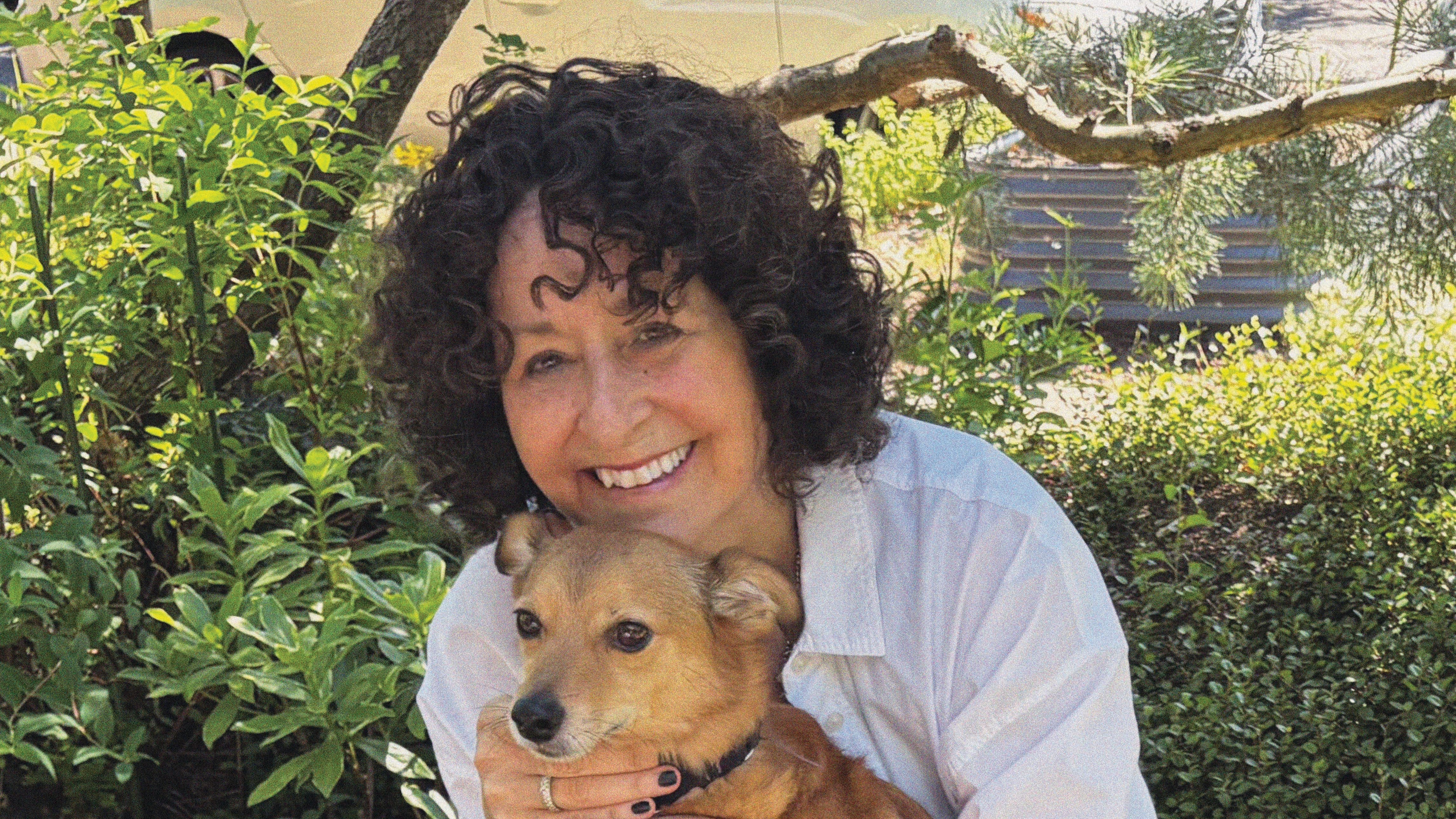
First the bad news: We’re all going to die.
You’re going to die. I’m going to die. (So will everybody we love, by the way.) And there’s no getting out of it. Working out and eating well can help delay the inevitable, but they can’t prevent all causes of death, nor can anything prevent death itself.
The good news: Portland author Liz Scott is just as unsettled by this as you are. Maybe more so. But she’s written a book that’s as funny as it is edifying on the subject.
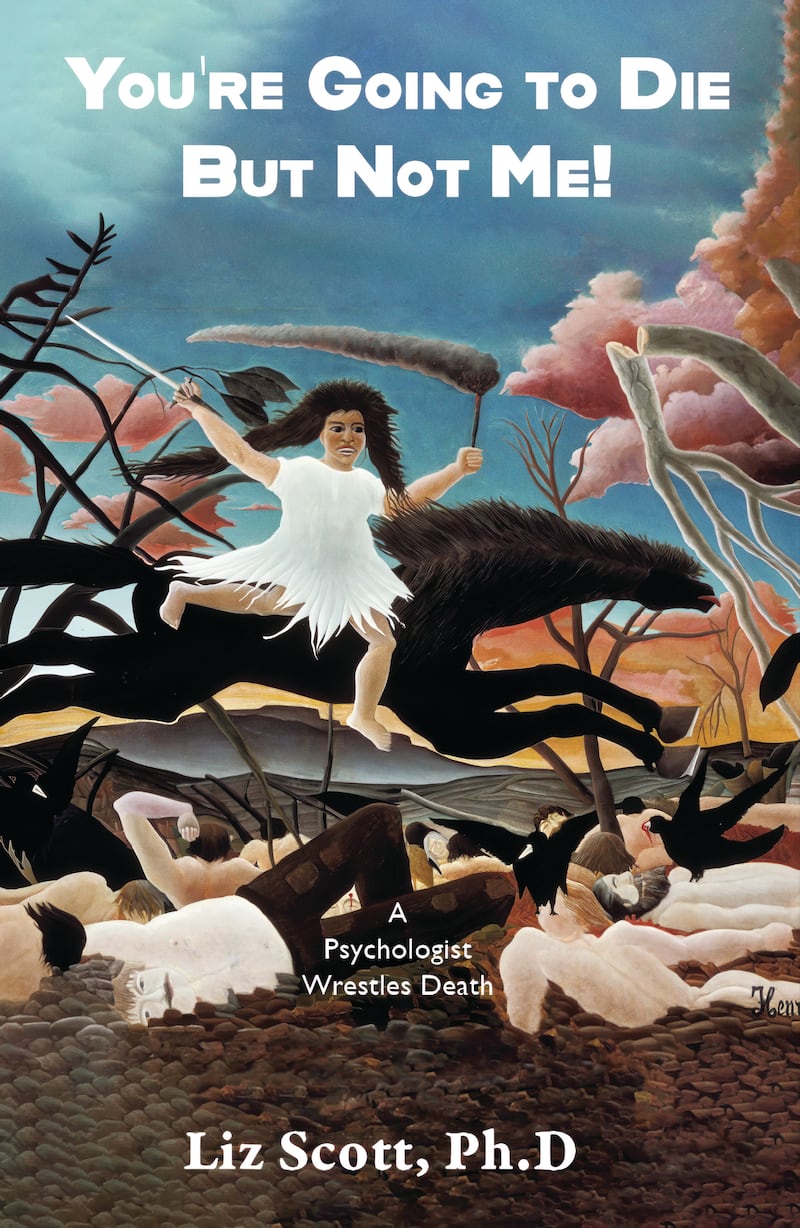
“I gotta say, I have always been flummoxed by people who seem (emphasis on seem) so equanimous, so nonchalant, so unfazed about the incontrovertible fact that one day they will die,” Scott writes in You’re Going to Die But Not Me! “People! Have you really faced it, looked it square in the face? You will cease to exist! Cease! To! Exist!”
Scott, a clinical psychologist for more than 50 years, was inspired to write the book after a long period of reckoning with her own preoccupation with mortality. “I’m a person who thinks about death approximately 20 to 30 times a day,” she writes. “And it is simply not possible to believe that I am alone in the way I relate to my mortality.”
So she dove deep into how people around the world and throughout history have reckoned with mortality, and the resulting book, published last month by Pierian Springs Press (218 pages, $26.95 hardcover, $22 paperback) is part comedic memoir, part broad survey of what it means to reckon with the beyond. We talked about finding solace in surprising places, wrestling with one’s fear of death, and why living forever sounds even worse than dying. This interview has been edited for brevity and clarity.
WW: You have obviously taken on a pretty light topic with this.
Liz Scott: Exactly. A day in the park.
What was the inspiration? What got you thinking it’s time to write a book about death?
Is it OK if I swear here?
Absolutely.
I’m so fucking old. So that’s, I guess, the primary inspiration. My husband died in 1999, and I had a very up close experience with death. And then my mother died in 2004—a similar up close experience. Then I had a breast cancer diagnosis in 2014, so that’s mortality staring me in the mirror every time I turned around. And I just turned 79, so it’s just...I have this chapter in the book about one of those waving-cat figures you see in nail salons. Tick, tick, tick, tick, tick. The clock was just tick, tick, tick, tick, ticking.
You mentioned in the intro that there’s this movement of hyperwealthy folks who have decided they’re not going to die, which is mind-boggling.
It’s completely mind-boggling. Do you want to spend all day swallowing handful after handful of supplements and have, like, a 500-calorie diet?
I don’t understand it. We have all these vampire stories, and they’re always very lonely, miserable people.
They’re lonely, miserable people. Everybody they know keeps dying, right? It’s bizarre.
So as you were studying the different ways that people you know have contended with their own death and their own mortality, what were some of the things that helped?
I could never get there, but the road I would like to travel toward was kind of the Ram Dass, Timothy Leary model. Timothy Leary was like, “Oh, I’m looking forward to it. It’s the next great adventure.” It’s like, I’ll never get there. Ram Dass seemed to be at complete peace, and he knew he was dying. And everybody around him seemed to affirm this, that he was just at complete peace with his life. And he had a wonderful life. He had beautiful community and obviously very meaningful work. So I would love to get somewhere in that column of having some amount of equanimity and peace about it. But I don’t know if that’s possible for me.
Was there anything in your research that came up where you were like, “Oh, man, I totally relate to that,” but you didn’t expect to find connection there?
I did this whole exploration on panpsychism, which is the theory that consciousness resides in everything, that consciousness is universal. I have no doubt that my dog and cat are sentient beings, right? And beyond sentience, they’ve obviously got personalities. They got feelings, and I think they’ve got consciousness, although probably not in the way we have consciousness. So I read this amazing book, The Secret Life of Plants, about how plants communicate with each other. We know about how trees communicate with each other through the root systems. We know how whales can communicate with another whale 300 miles away.
So panpsychism goes so far as to say there’s consciousness in rocks. So everything is imbued with consciousness. As I was exploring this, there was just such a sense of, OK, this bodily form will disappear, but I will sort of meld into the consciousness of the universe. So there won’t be any Liz-ness, I’m sure, but my consciousness will disperse somehow and somehow connect with other [consciousness]. It’s a physics question, right? You can’t destroy matter. That was strangely and surprisingly reassuring, and it started with this whole thing about my dog and then about becoming a vegetarian. That’s the road that kind of led me to panpsychism.
If you were speaking to a person who’s dealing with anxiety about death for whatever reason—maybe because it’s imminent, maybe just because that’s their personality—what are your takeaways for someone who might be wrestling with this sort of big unknown?
I’ll start with a general psychological principle, I think, which is that resistance creates anxiety and fear, and the antidote to that is approach. So the more we kind of resist thinking about something, the more powerful it becomes and sort of builds strength, because, you know, feelings want to feel. You know they want to feel; they want to have expression.
And they will find you.
And they will find you, and it’s in either a direct way or an indirect way. I think those are our only two choices. We can feel things directly or they’re going to come out in indirect ways. One thing I noticed in this exploration is that I was doing a kind of exposure therapy with myself. I was going down every single path I could figure out on this topic, every little rabbit hole. Exposure therapy has the effect of lessening anxiety when you expose yourself to the fearful stimulant, so that was really helpful.
The other thing—and I kind of don’t want to give all this away because it is part of the arc of the book—I did get to a place where I could see that there was something underneath the fear. And that was really, really helpful.
GO: Liz Scott discusses You’re Going to Die But Not Me! with Kimberly Warner, author of Unfixed, at Powell’s City of Books, 1005 W Burnside St., 800-878-7323, powells.com/events. 7 pm Tuesday, May 12. Free. She’ll also speak with Rene Denfield, author of the upcoming novel The Talking Bone, at Broadway Books, 1714 NE Broadway, 503-284-1726, broadwaybooks.net. 6 pm Wednesday, June 10. Free.