Skip to main content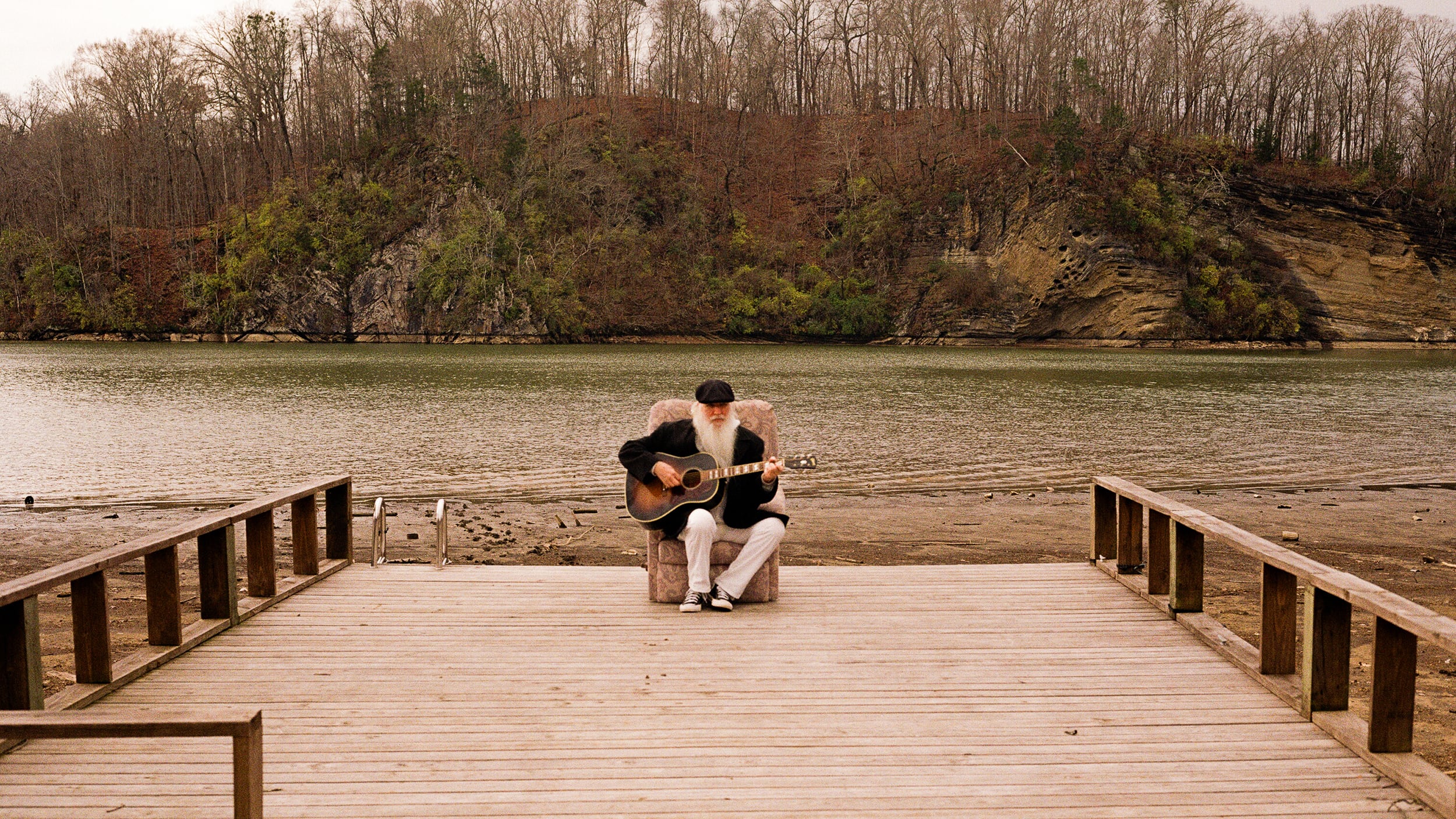
Robert Lester Folsom can barely contain his joy at his late-career stroke of luck. White-bearded and with a jovial Southern accent, the 71-year-old folk-rocker self-released his debut album Music and Dreams in 1976 before giving up his music career for domestic life, presuming his work had been forgotten.
As a spate of recent adulation proves, it very much was not.
“My band is all very young—in their 20s—and my audience is in their 20s and early 30s,” Folsom says over Zoom from Phoenix, Ariz., where one of the young punks in his band helps him fiddle with the volume on his laptop. “They see these young people playing my music with me, and I think they love that. And they love the fact that I’m not dead.”
Folsom is about to kick off a tour in support of If You Wanna Laugh, You Gotta Cry Sometimes, the third volume of archival recordings released by the Mexican Summer label. He and his band will perform at Mississippi Studios on May 14 in support of the record.
Folsom made these recordings between 1972 and 1975, when he was in his late teens. It’s easy to see why later generations of musicians like Animal Collective co-founder Panda Bear and pop-soul duo Whitney, both of whom have spoken about their admiration for Folsom, would be drawn to his music. With its sun-tarnished textures and homespun recording fidelity, this music would easily fit alongside the hazier end of 2000s indie rock.
Growing up in Adel, Georgia, a city of 5,000 far from any major urban agglomeration, Folsom was surrounded by music but had few opportunities to record professionally. For Folsom, making music was a matter of setting up a reel-to-reel and getting his friends together to jam.
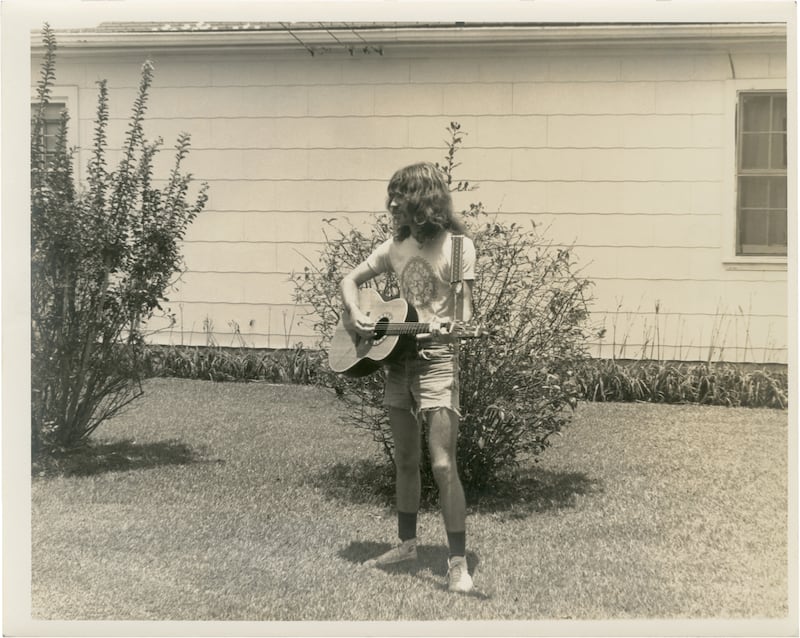
“We would do it at my home or at my friend’s house or in a barn—just wherever,” Folsom says. “It didn’t matter; we were mobile. We recorded in a hog parlor out on a farm, which was very interesting. The floor was concrete and the roof was metal, so it had a natural reverb.”
Meanwhile, Folsom and guitarist Hans VanBrackle were gigging with prog-rock band Abacus during the last hurrah of an era when every bar and hotel in Middle America had live entertainment. Disco hit soon after, and the DJs streamed in and put bands like Abacus out of work.
“We got our first gig at this place called the Plainsman’s Pub, and they told us, ‘We’re not going to need you next week. We got a DJ coming in to spin records,’” Folsom recalls.
As a tongue-in-cheek protest, Folsom recorded a disco-inflected number titled “My Stove’s on Fire.”
“I really didn’t like it that much, but now I think it’s a good song,” Folsom says. “It just seemed like a novelty song. It wasn’t that big a deal to me, but people really like it. Now I know why they do. It has a good melody; it has a good beat.”
Among those who saw potential in the song was Atlanta studio engineer Stan Davis, who allowed Folsom and the members of Abacus to record the songs at his LeFevre Sound Studios that would wind up on Music and Dreams.
First released in a limited private-press run, the album got some airplay in the South thanks to Folsom’s relentless DIY promotion (i.e., driving around and handing a copy to every DJ in the area).
However, the allure of domestic life soon came calling, and Folsom settled down to start a family, scrapping plans to record a second album. Meanwhile, copies of Music and Dreams started to find their way around the world, eventually finding a foothold in the place where much of the world’s vinyl ended up during the CD era: Japan, whose spectacularly well-stocked record stores were legendary among musicians.
“A guy in California had gotten in touch with me saying a band in Japan was playing my songs, and then someone had bootlegged the album on CD,” Folsom says. “That made me feel pretty cool.”
The hip Brooklyn indie label Mexican Summer got wind of the bootleg and reissued Music and Dreams in 2010, at a time when once-obscure folkies like Linda Perhacs and Sibylle Baier were getting a new lease on life through a ravenous reissue culture.
“Mexican Summer told me they wanted to make vinyl,” Folsom says. “I thought CDs were the thing. The next thing you know, I had boxes of vinyl at my front door. That was my payment.”
Folsom, who now lives in Jacksonville, Fla., has released a steady stream of both new and archival music since. Though still very much a cult phenomenon, Folsom’s following is strong enough that he sold out the Old Church on his last run through Portland.
“It’s been a lot of fun, and there’s a lot of work,” Folsom says. “I get to see a lot of the country. I’m getting to meet a lot of good people who appreciate what I’ve done and what I’m doing, and it’s a real blessing.”
HEAR IT: Robert Lester Folsom at Mississippi Studios, 3939 N Mississippi Ave., 503-288-3895, mississippistudios.com, 8 pm Thursday May 14. $32.36. 21+.