Skip to main content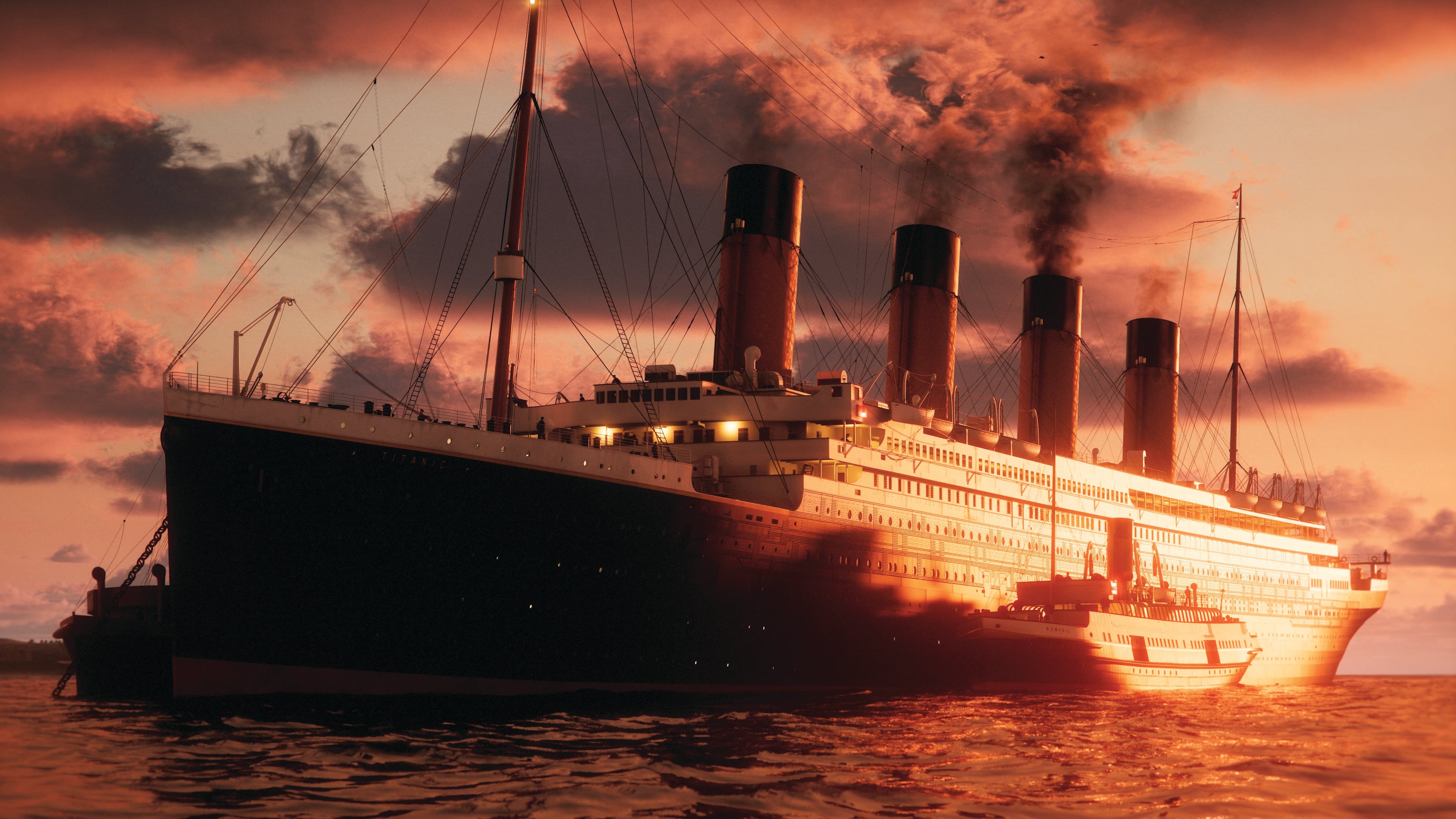
The Celine Dion song plays zero times. Leonardo DiCaprio and his sketchbook are never mentioned. But if the 1997 film Titanic suffuses your experience of walking through TITANIC: The Artifact Exhibition at the Oregon Museum of Science and Industry, you are not alone.
“The film is a cultural touchpoint for a lot of visitors,” OMSI’s featured hall coordinator Zoë Lovell-Parnell says, kindly, when I point out that walking through the third-class hallway feels just like the part of the movie when DiCaprio’s character Jack Dawson was handcuffed to a pipe.
OMSI is a science museum, though, and TITANIC: The Artifact Exhibition has much to offer beyond millennial nostalgia. More than 100 artifacts from the doomed ship are included in the exhibition: sheet music from the White Star Line songbook, a makeup compact, leather luggage, part of the grand staircase railing, and more all made it from the bottom of the sea to OMSI’s special exhibition rooms. The exhibition is curated by RMS Titanic Inc., the company that has conducted nine research and recovery expeditions to the wreck site since 1987, yielding about 5,500 artifacts, according to OMSI.
The journey begins with each visitor getting issued a replica White Star Line boarding pass with a real passenger’s biographical information. (Example: Thomas James Everett, 36, third-class ticket. Everett was traveling to Troy, N.Y., where he had found work as a crane operator. He left a wife and three children behind in Bristol, England, and planned to send for them when he had the money.) Visitors then scan the QR code on the back of the pass to learn the fate of their assigned passenger. (Spoiler for Everett’s boarding pass: For the third-class male passenger, it ends as badly for Everett as you think it will.)
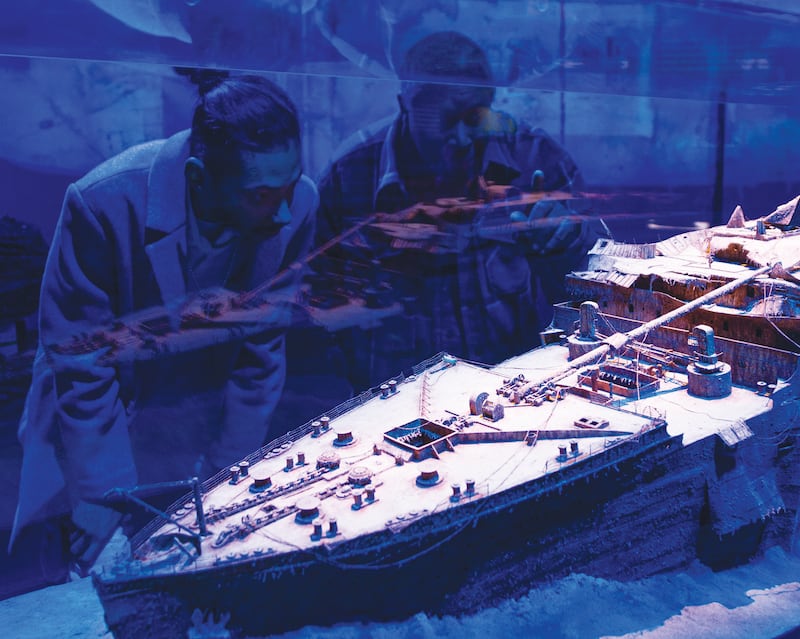
The show, which opened in March and runs through Oct. 18, has been popular among all ages, Lovell-Parnell says.
“I’ve been surprised by how many kids come in really interested and ready to learn,” Lovell-Parnell says. “Just that morbid curiosity for how the ship sank.”
As for the highlights of the exhibition, it’s a tie between the immersive features and the artifacts themselves. RMS Titanic pulls out some cool museum bells and whistles, including an enormous 360-degree immersive video room that makes it feel like you’re on the luxe first-class floor, then dropping down to the lower-class accommodations and finally to the boiler room. It’s a little vertigo-inducing, in a fun way. (Also immersive: the $8 add-on virtual reality tour of the ship, a 10-minute experience with no jump scares, the staff promises.)
There’s a large glowing iceberg in a dark starry room that visitors are invited to touch. The water in the North Atlantic registered about 28 degrees the night the Titanic crashed into an iceberg. Most of the 1,496 lost in the disaster did not die from drowning but hypothermia, the exhibition explains.
Being up close to the actual artifacts that were once 12,000 feet below sea level is fascinating, too. A tip from Lovell-Parnell to enhance your viewing experience: Each item is numbered on the bottom right of its exhibition placard. For example, the logometer, a mechanical device that measures the distance a ship has traveled, is numbered “94/0347,” which means that it was dredged out of the ocean in 1994 and the item is artifact No. 347. Chillingly, the logometer still reads 268 nautical miles, the distance the Titanic had traveled from noon April 14, 1912, until it sank at 2:20 a.m. April 15.
The passenger narratives are difficult to read yet captivating. Reading about prominent American families of the Gilded Age—the Guggenheims, the Astors, the Strauses—has its own fascination, as does seeing the faces and stories of the young workers in the boiler rooms. One panel of wall text should be marked NSFP (not safe for parents), describing when a mother and her infant get separated and only one of them survives the disaster.
TITANIC: The Artifact Exhibition manages to educate visitors about the disaster without sensationalizing it. OK, definitely dramatizing it but remaining respectful of the dead. The primary soundtrack to the show is the sound of the ocean lapping at the sides of the ship, not “My Heart Will Go On.” But what’s that in the exhibition gift shop? A vibrant blue “Heart of the Ocean” necklace for $35? Apparently, the Kate Winslet quote is still true: We’ll never let go.
GO: TITANIC: The Artifact Exhibition at OMSI, 1945 SE Water Ave., 503-797-4000, omsi.edu. 9:30 am–5:30 pm Tuesday–Friday and Sunday, 9:30 am–7 pm Saturday, through Oct. 18. $22.50–$29.50.