Skip to main content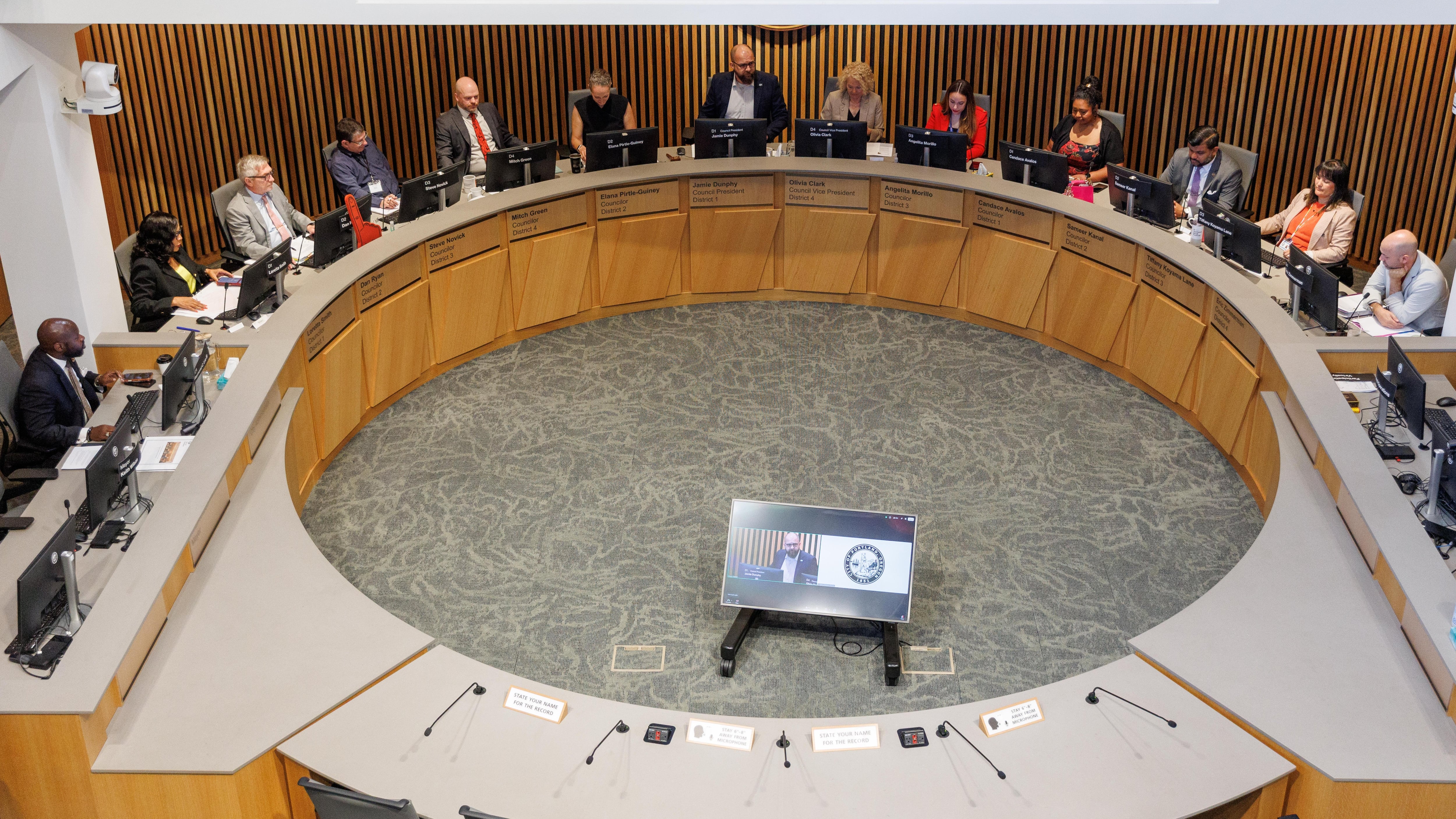
MAYOR AND UNIONS OPPOSE PARTICIPATORY BUDGETING: A measure sailing toward the November ballot with little pushback now faces organized opposition from some of the city’s most powerful forces. Ballot Measure 26-267 seeks to let Portlanders decide how to spend 2% of the city’s general fund every year, a practice called participatory budgeting. Just this week, an opposition campaign emerged to convince voters they should kill the measure at the ballot box. Behind the effort are at least two heavy hitters: Mayor Keith Wilson and Laurie Wimmer, executive secretary-treasurer of the Northwest Oregon Labor Council, which encompasses most of the unions representing a majority of city employees. Wilson said in a statement the measure would pull “at least $16 million a year from the fund that pays for shelter beds, park maintenance, and investigators, and [hand] it to a process the measure doesn’t even define,” something “Portland can’t afford,” he wrote. Wimmer will chair the political action committee set up to campaign against the measure. A political consultant leading the effort declined to say how much money the opposition campaign had raised so far, if any.
WATCHDOG FILES ELECTIONS COMPLAINT AGAINST SHARON MEIERAN: A campaign finance watchdog filed an election complaint Aug. 31 with Multnomah County and state elections officials against Sharon Meieran’s campaign for county chair and the political action committee she directs, Fixing Multnomah County. In it, Seth Woolley alleges that Meieran, a former county commissioner who served two terms before leaving at the end of 2024, committed eight campaign finance violations. Most concern Fixing Multnomah County, which raised and spent over $70,000 on the development and writing of a plan Meieran has now made central to her campaign for county chair. Woolley alleges Meieran skirted county campaign finance limits, capped at $603 per donor for individuals and PACs, because she used Fixing Multnomah County to fund her plan for county chair, and then failed to report the plan as an in-kind contribution. The first five counts of Woolley’s complaint pertain to an overlap between Meieran’s campaign committee and the PAC, which WW examined in August (“Plan Overboard,” Aug. 19). In an email to WW, Meieran said she broke no laws and was the only candidate in the race running with a plan: “This is a cynical effort to make it seem like it’s somehow cheating that I put substance before politics.”
MAIL-IN VOTING HINGES ON COURT DECISIONS: Last week was an eventful one in President Donald Trump’s ongoing effort to undermine Oregon’s mail-in voting system ahead of the 2026 midterms. It started back in March with Executive Order 14399, which directs the executive branch to distribute ballots only to voters named on lists approved by the federal government. Trump has long spread distrust of mail-in voting, a system pioneered in Oregon. In separate lawsuits, voting rights groups and a coalition of Democratic attorneys general—including Oregon’s Dan Rayfield—challenged the order on the constitutional grounds that staging elections is the responsibility of the states and Congress, not the executive branch. U.S. District Judge Indira Talwani agreed and issued an injunction forbidding the White House to implement key aspects of Trump’s order. Then, on Aug. 24, the Supreme Court struck down Talwani’s injunction, holding that because the Postal Service had yet to formalize its new rules, the states and voting rights groups could not yet sue. But after the USPS finalized its new rules days later, the plaintiffs promptly refiled their legal challenges and Judge Talwani issued a 14-day temporary restraining order freezing implementation of the EO. That’s where things stood at press time but unlikely where they’ll remain until Nov. 3.
NEW CONTRACT ON THE TABLE FOR PPS SUPERINTENDENT: The Portland School Board was scheduled to consider a contract extension Sept. 1 for Portland Public Schools’ superintendent. Under the proposed agreement, which the board was slated to vote on after press deadline, Dr. Kimberlee Armstrong would receive a pay increase that will largely come through a retention bonus that takes effect in June 2028. Armstrong, who made $334,750 in the previous contract year, is set to make a base pay of $344,792 in the new contract. (Her previous contract included 3% yearly increases. She started at $325,000 when hired in 2024.) The contract will nearly double Armstrong’s monthly car payment stipend from $400 to $750, increase the number of vacation days she can cash out, and introduce five flex days for district work she does on holidays or weekends. But the biggest benefit comes as an incentive for Armstrong to serve beyond four years. If the School Board approves her contract and Armstrong serves through 2027–28, she will receive a retention bonus of 3% of her base salary that year. In each subsequent year, the retention bonus will be upped to 5% of the base salary. The pay bump comes as Armstrong is under intense scrutiny as she navigates school closures and teacher layoffs. The district has faced years of budget shortfalls, and made more than $50 million in cuts this spring. Eddie Wang, the Portland School Board chair, says Armstrong’s total compensation package lags behind those at similarly sized school districts nationwide, and local districts like Beaverton. But pay wasn’t Armstrong’s top priority, Wang says. “The thing that she asked for that I think was more important to her than pay was respect of her personal time.”