Skip to main content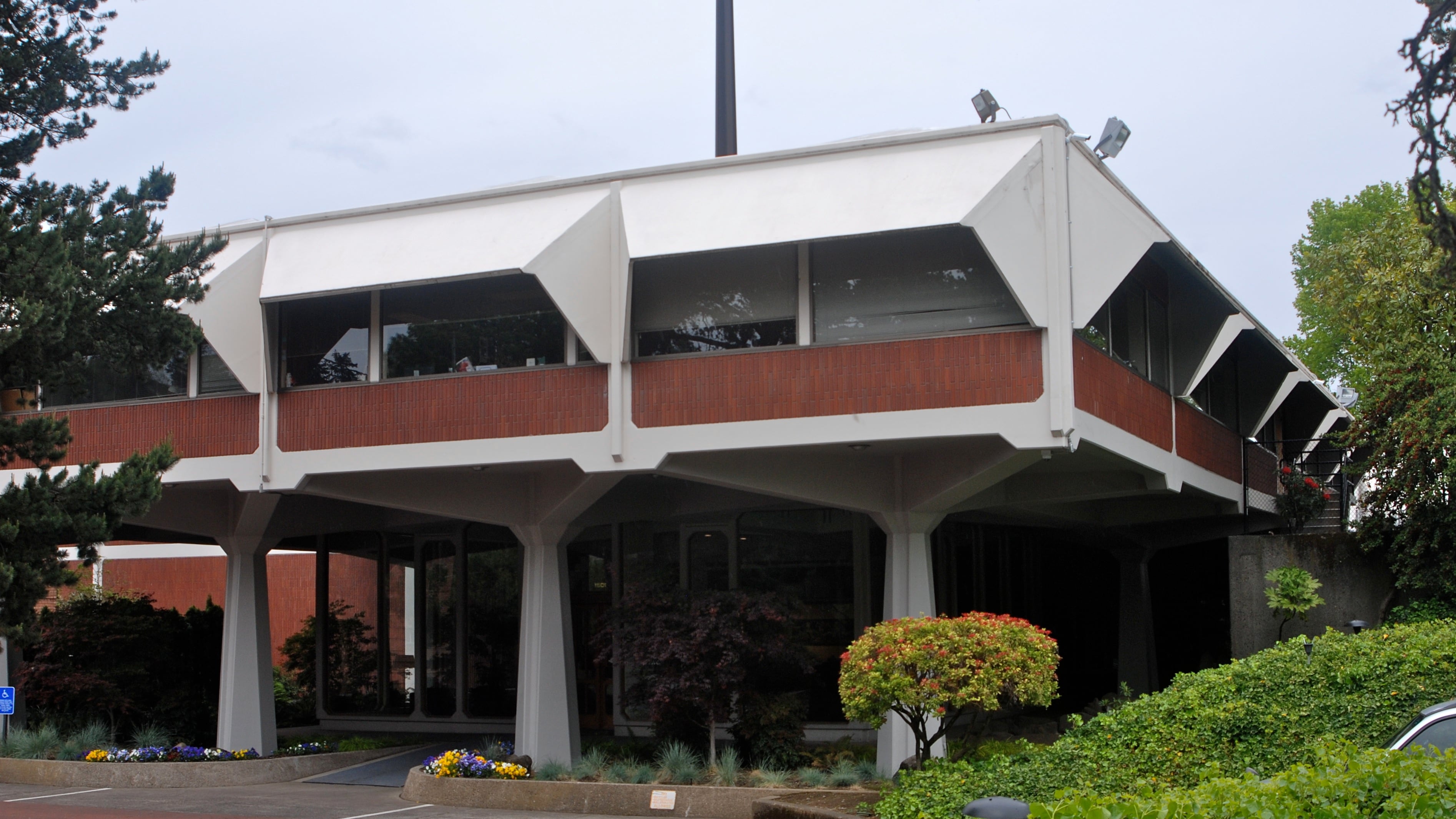
Oregon Attorney General Dan Rayfield asked a judge late this week to halt federal approval of a corporate merger that would leave Portland with three of its four major local broadcasters owned by media companies that have signaled their loyalty to President Donald Trump.
Oregon was one of eight states on Friday to file a motion for a temporary restraining order a day after the Federal Communications Commission approved broadcasting giant Nexstar’s $6.2 billion purchase of its rival Tegna. Earlier this week, the multistate coalition had filed a lawsuit seeking to block the merger. Critics warn it violates antitrust laws, could hike prices for consumers, and creates a larger platform for the president among local TV stations already friendly to his nationalist agenda.
The merger would give Nexstar control of 250 local stations across the country; Politico reports that they would reach more than half of American homes. In the motion, the states note that Nexstar and Tegna own competing stations in 31 markets—competition that would vanish with the merger.
As WW reported last September, Portland is one of those markets. Nexstar owns KOIN-TV, the Portland affiliate of CBS, while Tegna owns KGW-TV, the NBC affiliate.
“Right now, we have four news outlets,” Rayfield told WW in an interview earlier this month. “If this goes through, you’re going to effectively have three. This is part of a larger trend: You’re starting to see local communities lose editorial control over the news that reaches them every day. And that is a dangerous place to be.”
In their motion, filed Friday in federal court in California, the eight states argue that the FCC has rubber-stamped “a broadcasting behemoth.”
They warn that the expanded Nexstar would have “control over an unprecedented share of broadcast television content, including local news and sports, from the nation’s most-watched ‘Big 4′ stations (those affiliated with FOX, ABC, NBC or CBS). A post-merger Nexstar has more substantial power to raise prices for cable, satellite, and fiber-optic television consumers, and to control and degrade the quality and variety of broadcast television content.”
The states correctly note that the merger flouts a cap Congress passed in 2004 that limits a single local broadcasting company from reaching more than 39% of viewers. FCC chair Brendan Carr, a Trump loyalist, has scoffed at the cap as a relic.
As Carr’s stance suggests, such a monopoly also has a political component—one felt especially keenly in Portland. The president’s allies believe Nexstar and another local company, Sinclair, are a counterweight to the liberal bias of NBC and ABC News. Last year, the local station owners flexed that muscle by preempting the broadcast of Jimmy Kimmel Live! after the late-night host mocked conservative responses to the assasination of Charlie Kirk.
In Portland, KATU-TV, the ABC affiliate, is owned by Sinclair. (WW partners with KATU on a weekly segment highlighting our reporting.) KATU and KOIN would be joined by KGW under ownership of companies reluctant to broadcast criticism of Trump.
Nexstar CEO Perry Sook issued a statement to Politico this week celebrating the FCC approval. “This transaction is essential to sustaining strong local journalism in the communities we serve,” he wrote.
Rayfield, who has regularly challenged Trump in court for more than a year, described the matter differently to WW.
“The current federal government is very interested in controlling the narratives that go out into the public,” he said. “Our local TV stations have traditionally been where you can get neutral information. You’re losing that editorial diversity—you only have one voice speaking to an entire community. It will reach 84% of Oregon households.”