Skip to main content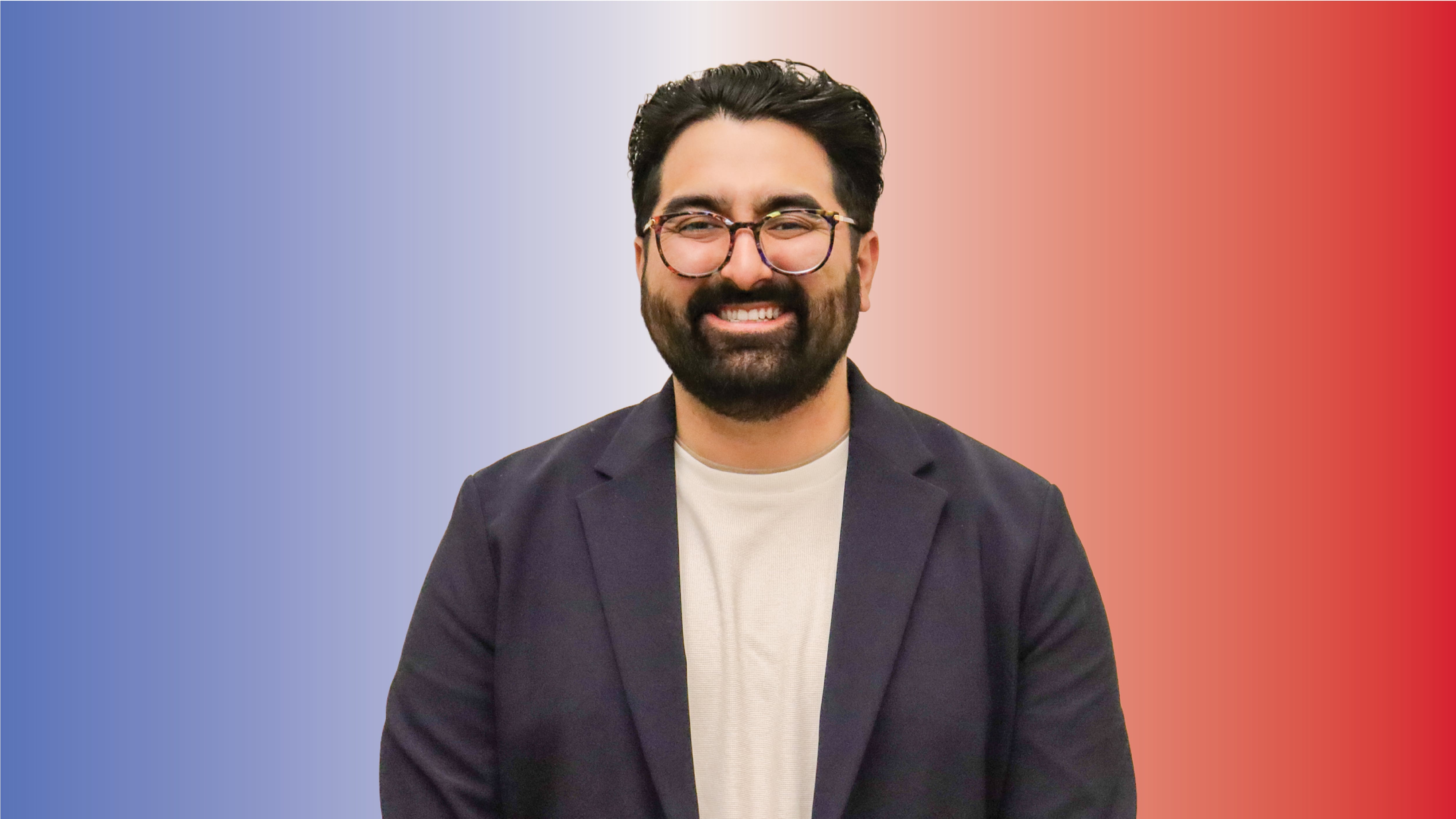
Metro President
Juan Carlos Gonzalez
Lynn Peterson lasted nearly eight years in the pilot’s seat of Metro before hitting the eject button nine months early and parachuting into Lake Oswego for the city manager’s job. Peterson had aspirations for higher office—she launched a bid for the 5th Congressional District in 2023, only to suspend her campaign before the Democratic primary—but her legacy is that she elevated Metro president itself to a higher-profile office, for better or for worse.
Metro has always been a turducken of an agency: Its primary assignment is regional land use planning, but its portfolio also includes the Oregon Zoo, the Expo Center, trash collection and recycling, and 19,000 acres of parkland that includes 14 historic cemeteries. (Recently, Metro decided to hand back management of performing arts venues like the Arlene Schnitzer Concert Hall to their owner, the city of Portland.) But under Peterson, Metro became the repository for two enormous taxes: a $653 million affordable housing bond and a $2.5 billion homeless services tax on high earners. The first pool of money has largely been spent; the second is set to expire in 2030.
Peterson entered into deals with the architects of these measures because all three Portland-area counties fall within Metro’s borders. In other words, it’s the biggest pool of taxpayers you can tap and still have confidence in blue votes. But the result has been greater scrutiny than the agency has ever before experienced—plus the headache of babysitting Multnomah County leaders who struggled to spend the homeless dollars or quantify the results.
In short, Peterson leaves her successor some baggage. Five candidates seek the job. Ken Ross is president of the SEIU local representing Tigard city employees; Bruce Broussard is the longtime host of a political affairs television show; Philip Fensterer is an Oregon Zoo marine life keeper; and Chris Christensen is a retired loan officer who wants to pay homeless people $10,000 to leave Portland and never return.
Collectively, this quartet is unlikely to garner as many votes as the front-runner, Metro Councilor Juan Carlos Gonzalez. (Some of them grouse that Gonzalez, who has received every major endorsement in this contest, was anointed to the role.) Gonzalez, 33, has represented Washington County on the Metro Council since 2018; when he won that office, he became the youngest candidate elected to the regional government in the two decades Metro had kept track of such figures.
Gonzalez fashions himself as a youthful change agent in the mold of Zohran Mamdani, although he can’t match the Big Apple mayor’s charisma or socialist politics. (As of last year, he was reading Ezra Klein’s Abundance.) He arrived at our office eager to discuss accountability for homelessness relief spending and seems to recognize the gravity of the task he seeks to undertake.
We certainly hope so. Metro’s Supporting Housing Services tax expires in 2030. The money runs out one year later. Upward of 5,000 people receive services from the tax; some 8,000 get rent assistance. Public confidence in the system distributing that money is so low there’s real doubt whether the tax can be renewed. What happens when the spigot is turned off?
Meanwhile, Metro is making layoffs at its trash and recycling department; it has floated turning the Expo Center into a sports hub but hasn’t found a way to pay for it; the parks and nature department lacks the operating revenue to manage the land it’s adding to its inventory; and an audit says the zoo has wandered off its pledged course in spending a $380 million bond voters passed just two years ago.
It’s a lot. And that’s not even accounting for Metro’s core task: planning. The agency is charged with long-term planning, yet Portland’s population is stagnant at best and the city is slipping further each year behind others that don’t spend half as much time scratching their chins about the future.
To his credit, Gonzalez has volunteered to fix these problems. We’re counting on him to find ways to deliver the region from its doldrums and guide it toward the prosperity it was experiencing when he was first elected to the Metro Council eight years ago.
Gonzalez’s biggest kitchen fail: On a date, he burned the salmon—twice. His date later married him anyway.
Metro Council District 1
Ashton Simpson
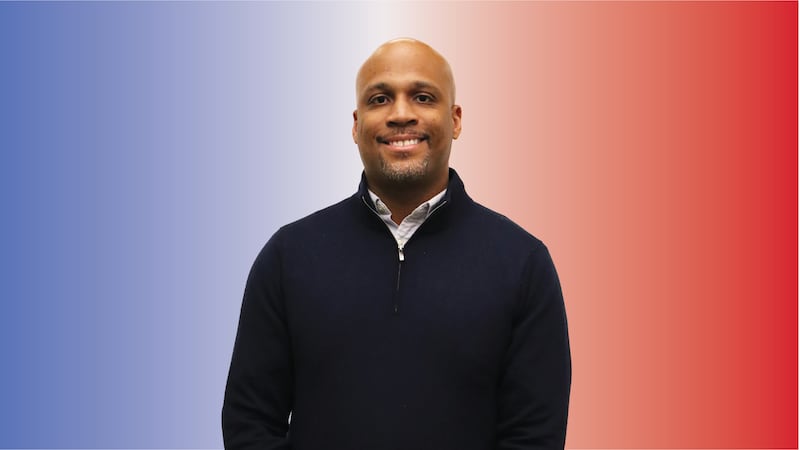
This race to represent Metro’s easternmost realm (think Gresham and its environs) pits incumbent Ashton Simpson, a retired Air Force technician and transportation safety crusader, against Noah Ernst, a superintendent and in-house lawyer for Radio Cab, the taxi company.
Simpson, 40, joined Metro in 2023 after two years as executive director of the advocacy group Oregon Walks (he was a key player in East Portland’s ever-contentious 82nd Avenue redesign). Endorsed by every mayor in his district, he describes himself as a coalition-builder at Metro, and touts his work on a data sharing system to better track the hundreds of millions of dollars in homeless services cash the agency doles out each year. We get the sense he does not suffer fools gladly, and that he’s the smartest person in most rooms he enters. We’re a little confused why he didn’t run for Metro Council president.
Ernst, 54, returns to the ballot after a middling finish for Portland City Council in 2024. His campaign has two key theses: First, Metro has little to show for the taxes it extracts in the name of combatting homelessness. Second, area transit agencies are making decisions—like adding a median on Southeast Division Street—to appease a vocal minority of cyclists and public transit hawks while disregarding the concerns of normal people who, particularly in sprawling suburbs long developed explicitly for cars, need their vehicles to get around.
On the first front, we are sympathetic to aspects of Ernst’s account that tax dollars have flowed into a metastasizing complex of often duplicative nonprofits that far too often have little to show for the taxpayer investment. Still, this story almost certainly casts the area’s nonprofit ecosystem in an unreasonably negative light. And when asked about his positive vision for how the homeless services money ought to be better spent, Ernst grew vague. Our impression is that both men occupy echo chambers where a particular myth about social service nonprofits is repeated—in one tale, they’re angels; in another, the devil—but Simpson has the better handle on where dollars hit the streets.
As for the urban planning matter, while officials certainly could better incorporate citizen feedback on its projects, car infrastructure is quite simply the water we swim in, and we find the notion of drivers as an underrepresented interest group to be preposterous. We recommend you vote Simpson.
Simpson’s biggest kitchen fail: “I don’t fail in the kitchen.”
Metro Council District 4
Alex Phan

Councilor Juan Carlos Gonzalez is seeking the Metro Council presidency, which leaves a vacancy in the district he’s represented for two terms: District 4, which covers northern and western Washington County, including Hillsboro, Cornelis, Forest Grove, Beaverton and Aloha. Two candidates are vying for the seat.
Alex Phan is a longtime real estate agent who recently broke ground on his first housing development alongside several partners, including the Micronesian Islander Community: a 41-unit affordable apartment complex in Salem. The son of Vietnamese immigrants, he grew up in Washington County, married his high school sweetheart, and started a family there. Phan, 42, says he running because he wants to help Metro convene local governments and get them to stop pointing fingers and start making progress on homelessness and housing production.
Getting déjà vu? So are we. Countless candidates make this same pitch: that they’ll be the one to stop the jurisdictional squabbling and find practical, data-grounded solutions to the region’s most pressing problems. But the blame game among Portland’s needlessly overlapping governments continues. And the number of people sleeping in the rain reached 7,000 last winter.
Still, Phan has a front-row seat to the pissing contest. He served on Metro Council President Lynn Peterson’s Supportive Housing Services work group in 2025. (That’s the tax on high earners, collected in Multnomah, Washington and Clackamas counties and overseen by Metro, that brings in roughly $300 million a year to get people indoors and keep them housed. Passed in 2020, it’s set to expire in 2030 if the Metro Council doesn’t figure out a plan to extend or renew it.) Phan says he saw firsthand how every party blamed another for the lack of results until, finally, Councilor Ashton Simpson told everyone to get serious. Phan says that if elected, he’ll push Metro to implement standardized data collection and systems across all three counties, and bring in providers on the ground who are often divorced from the decisions made by elected officials about how the tax dollars are used. The Metro Council has four short years to prove to voters that the SHS measure is worth an extension or renewal, and we like how Phan approaches the task.
His opponent is Miles Palacios, also raised in Washington County. Palacios, 33, has worn a number of hats. He worked in the wine industry, as a legislative aide to Sen. Janeen Sollman (D-Hillsboro), a constituent relations staffer to former Gov. Kate Brown, and as a state lobbyist for the Association of Oregon Counties. He’s now chief of staff to state Sen. WInsvey Campos (D-Aloha) and serves on the board of directors for the Tualatin Hills Parks and Recreation District, an elected position.
While he said all the right things about what the region should strive for—more affordable housing, a vibrant economy, additional high-paying jobs, and a reduction in homelessness—he provided few concrete examples of how he’d work to achieve any of those things, many of which are not directly under Metro’s purview or control. Given how much mission creep is already a problem for Metro, this is a worrying tendency.
Phan is not a perfect candidate. There’s reason to fear his real estate ties would tempt him to capitulate to business interests, but our concerns were partly assuaged by the endorsements he’s received from current Metro Councilors Gonzalez, Simpson and Duncan Hwang—all of whom lean left. We urge a vote for Phan.
Phan’s biggest kitchen fail: He conceded to overcooking pork—then launched into a reasonably charming anecdote about surprising his family with a cameo at the teppanyaki table at Benihana.
WHAT’S NEXT? If a candidate gets 50% plus one vote, they assume office Jan. 4. If not, the top two have a runoff in November.
Click here to view all of our May 2026 Endorsements!