Skip to main content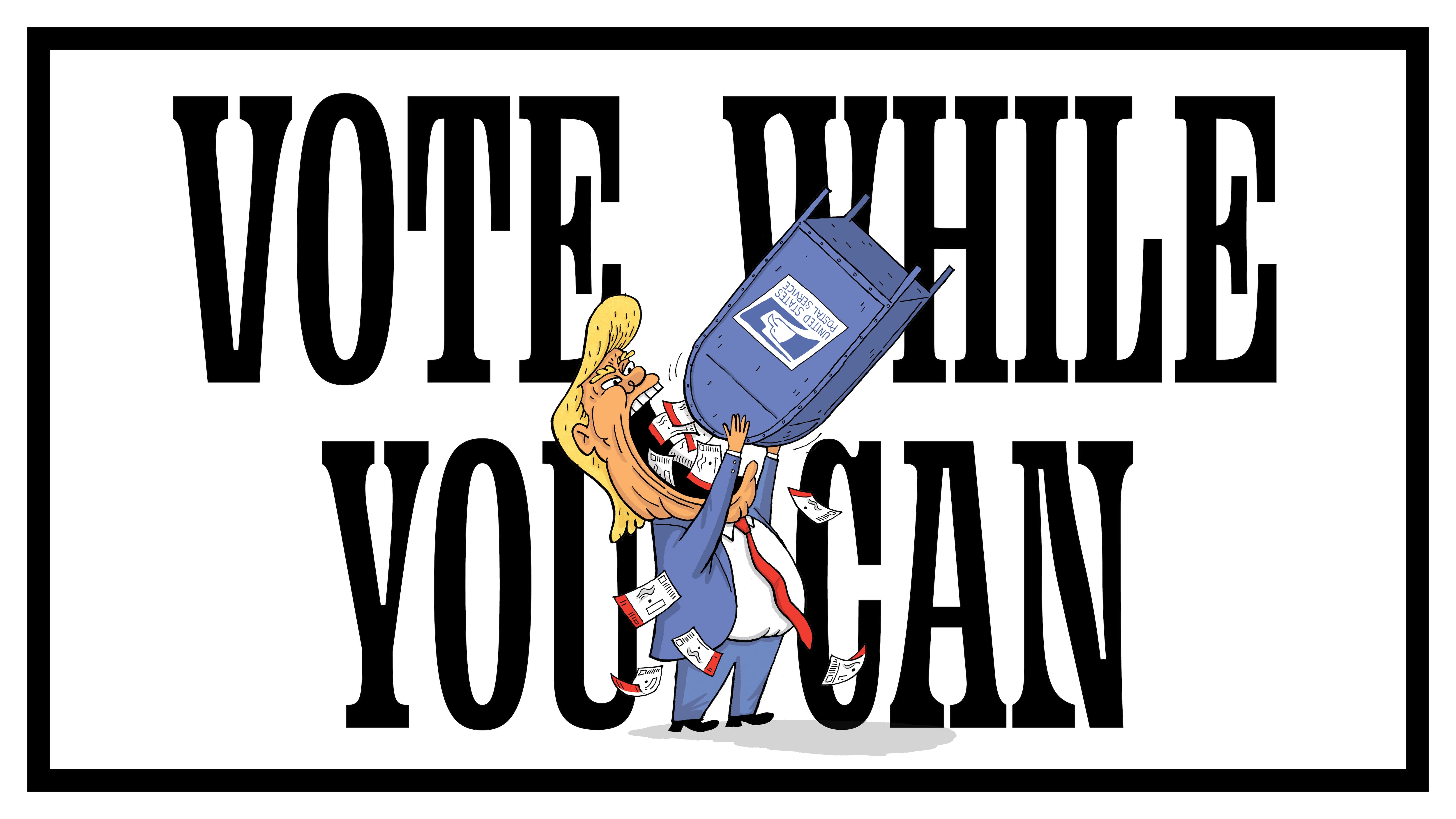
In the coming days, you will open your mailbox to find a sacred object.
WW's May 2026 Endorsements



It’s an envelope, containing a ballot. Filling it out around the kitchen table is a tradition that’s as much a ritual of the Pacific Northwest spring as hiking Dog Mountain or watching the Trail Blazers get bounced from the playoffs. It’s part of what makes us Oregonians.
It’s also under threat. President Donald Trump has signaled his intention to destroy voting by mail, and is putting his plan into action—most recently by ordering the U.S. Postal Service to deliver mail ballots only to voters the federal government has deemed eligible. Falsely blaming voting by mail for his defeat in 2020, the president wants to decide who the voters are before they can decide who the next president is.
With Trump hell-bent on eroding democracy, it’s easy to feel powerless. But we urge you not to let these fears prevent you from bringing about change. While you have the right to fill in the bubbles on your ballot from your couch, use it. It’s a power you have to move the needle in a city, state and nation that are each struggling in different ways.
Yes, it’s a lot of research to fit in between your job, dinner prep, and the kids’ soccer practice. We’re hoping this issue gives you a bit of a running start.
Enclosed in its pages are our picks for 30 contests in the May election. Some will effectively decide who takes office next January—think nonpartisan ones like Metro president, or primaries in counties that are overwhelmingly Democratic or Republican. In parts of the state, these party primaries are growing into well-funded and bitterly contested battles with consequences for the Oregon Legislature. Prominent unions have flexed their muscles, backing insurgents to dial up the heat on incumbents who’ve displeased them, setting the stage for a number of nail-biters.
The vast majority of races this cycle, however, lay groundwork for the big November election. What happens Nov. 3 is obviously consequential at the federal level, as the Democratic Party seeks to create at least a semblance of a congressional defense against Trump’s antics. But at the state level, some of these races will also decide Oregon’s national reputation. Republicans are now picking a candidate to face off against Gov. Tina Kotek in the fall, and in purple districts, primaries will determine face-offs at the state level that will have consequences for upcoming legislative priorities; think universal health care, school funding reform, housing production, and data center regulations, just to name a few. (In the pages that follow, look for explainers telling you what happens after the May race is decided.)
Other decisions on your ballot will directly set policy. Democrats maneuvered to move a gas tax measure to the May ballot, not wanting it near their names come November, while one of Oregon’s best museums hopes you follow history (but don’t remember some past promises).
As we do every election cycle, WW invited every candidate in a meaningfully contested race to our office for a sit-down interview, alongside their opponents. We define a race as contested if two or more people filed Voters’ Pamphlet statements for the same race. (That’s why you won’t find an endorsement of Kotek—she faces no serious opposition in May.) Our editorial board interviews the candidates and discusses whom to endorse. If nobody shows up, we endorse anyway. Sometimes the decisions are no-brainers, but often we debate for weeks on end.
These picks aren’t often about ideology. What matters to us is people who get things done, or who can provide the Legislature with some fresh ideas. The nation and Oregon are charting unprecedented territory. We tried to pick people with the wits, and guts, to try and keep up.
We want competent leaders who demand accountability for our taxpayer dollars and tighten up what are increasingly unwieldy state and local budgets that grow even as public services seem to get worse. We’ve endorsed candidates we think will take those responsibilities seriously, especially at a time when the federal government is holding a magnifying glass up to our state’s affairs. Perhaps the best defense we have against an administration that likes to single out Democratic-run states with threats of federal intervention is to show we can take care of our own business.
We are also always fond of independent thinkers, perhaps now more than ever. We ask candidates questions that reveal their judgment, how they stand strong even as they face pressures from their own party. It’s a quality we’ve always found important, but that we believe has become more critical as our politicians dig deeper into their respective trenches. (To lighten the mood, we also asked candidates to describe their most spectacular failure in the kitchen, but we didn’t hold it against them.)
We must acknowledge we’re not always excited about our picks. At times, we find candidates lackluster, or worry how well they’ll hold up in office. Our endorsements are an imperfect process, determined by a limited sample size (no one would argue that four Portland journalists represent the breadth of Oregonians’ desires). But we do our best to make the decisions we feel best serve Oregonians, and we take the gravity of our responsibility seriously.
We have no idea what the future holds, or for how much longer you’ll be allowed to spread out an edition of WW next to you as you fill out your ballot. We just know you may do so in the next three weeks. We hope you will.
WW’s editorial board is Joanna Hou, Aaron Mesh, Sophie Peel and Andrew Schwartz.