Skip to main content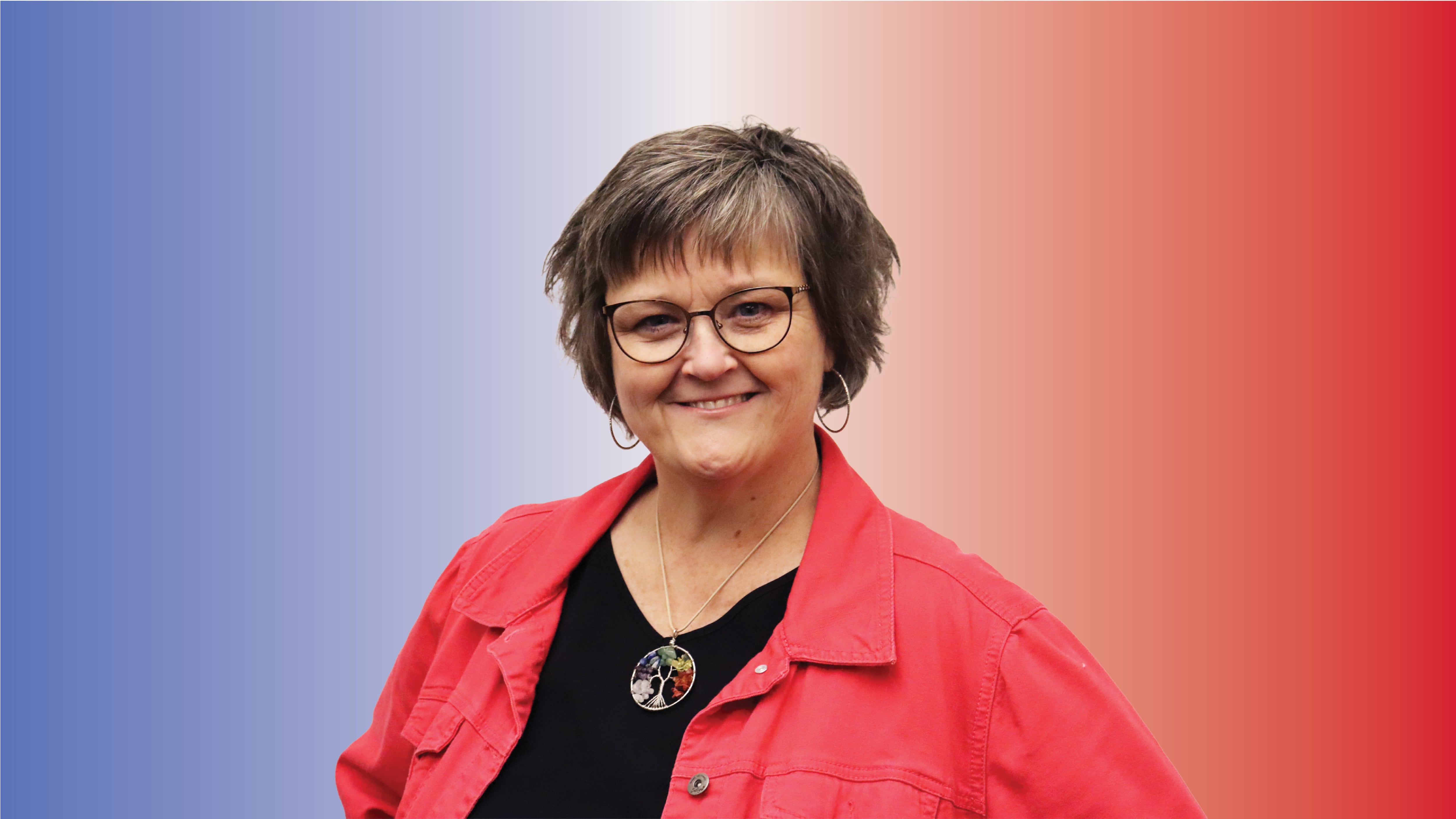
Senate District 15
(Forest Grove, Cornelius, Hillsboro, Rock Creek)
Janeen Sollman
Democrat
The most heated Democratic primary contest in the state is playing out in a Senate district that covers a passel of Washington County towns and the maze of office parks and industrial prefab surrounding Intel. Here, state Sen. Janeen Sollman, 56, seeks a second term but faces a strong, union-backed challenger in Myrna Muñoz, 51, a longtime educator who now works in the Oregon Department of Education.
Sollman was a longtime Hillsboro School Board member before first winning state office in 2016—serving two terms in the House before moving up to the Senate in 2022. In the Legislature, Sollman is best known for her work on the Plastic Pollution and Recycling Modernization Act, which holds companies that produce packaging responsible to pay for recycling system improvements. She also led an effort to streamline the Bottle Bill in the 2025 session with Senate Bill 992.
But Sollman’s involvement with three other bills has turned many of her former friends against her. In the 2025 legislative session, she was one of two Democratic state senators to vote against Senate Bill 916, which allows striking workers to collect unemployment benefits. This short session, she pushed for Senate Bill 1555, an education spending reform bill, without adequately consulting the Oregon Education Association, the powerful statewide teachers union. Meanwhile, environmental groups are upset with her because she tried to push Senate Bill 1586, which would have added land to Hillsboro’s urban growth boundary and originally included tax breaks for data centers.
Sollman’s stances didn’t make a difference in the outcomes—in each case, the bill in question didn’t go in her favor—but she certainly succeeded in annoying key Democratic constituencies. The teachers and the enviros have now rallied around Muñoz, who already has a sister in the Legislature—state Rep. Lesly Muñoz (D-Woodburn)—and another sister who is a lobbyist for OEA. Muñoz explains her run by saying she feels Sollman has grown increasingly out of touch with her constituents.
That claim doesn’t stand up to scrutiny. Sollman consulted plenty of people—including parents and school districts—before voting against SB 916, which makes Oregon the nation’s only state offering unemployment pay to striking public sector workers. It’s a groundbreaking victory for labor, but it offers little consolation to Sollman’s constituents who expect it will lengthen teacher strikes and cost public agencies millions of dollars. She correctly recognized—in conversation with school districts—that the state is among the most regressive in school funding for high-poverty districts, and she tried, with SB 1555, to open the door to fixing an archaic funding system. And she changed her position on data centers after hearing from firefighters and building tradespeople, among others, ultimately withdrawing her support for a proposal to extend tax breaks to data centers.
The simpler explanation for Muñoz’s bid is retribution for Sollman not following the marching orders of Oregon’s most powerful unions. To be sure, we rolled our eyes a little at Sollman saying unions were “bullying” her by backing a primary challenger. That’s politics. If you want to play in the NFL, put on shoulder pads. But in trying to unseat a sitting senator from her own party, Muñoz needs to make a case that she would do a better job—and she hasn’t. She offers an appealing platform, including a temporary moratorium on data centers, increasing school funding, and constructing more affordable housing, but can’t detail how she’d achieve these aspirations. Instead, she says she’ll engage members of her community in every decision she makes. Given the context we’ve just outlined, it’s pretty clear whom she’ll listen to.
We’re not convinced Sollman has a community engagement problem. More importantly, the Legislature is short on senators bold enough to stand up to their biggest backers, and who display a knack for independent thought. Sollman’s got our vote.
Sollman’s biggest kitchen fail: She’s burned plastic spatulas on flat stoves. “The smell is so horrible, burning plastic,” she says. “It’s disgusting.”
WHAT’S NEXT? The winner of this primary faces Harold Hutchinson, who is running unopposed in the Republican primary.
Senate District 16
(Scappoose, Astoria, Tillamook)
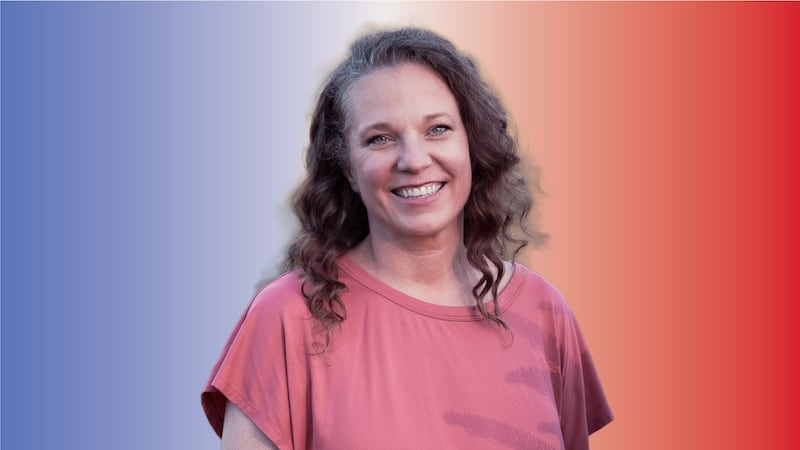
Courtney Bangs
Republican
Sitting state Sen. Suzanne Weber (R-Tillamook) is not eligible to run for reelection for this Senate seat, which fully encompasses Tillamook, Clatsop and Columbia counties, along with a sliver of western Washington County. (Weber’s participation in a legislative walkout in 2023 bars her from holding office, given she exceeded 10 unexcused absences.) About 500 more Democrats than Republicans are registered in this district, making it deep purple territory.
In the Republican primary, Clatsop County Commissioner Courtney Bangs is the clear choice, amassing a handful of endorsements, including from Weber. Her priorities include protecting working forests and natural resource jobs, and reducing housing costs by cutting “bureaucratic red tape.” Bangs, who has been on the county board for five years and is now vice chair, is well known locally for standing against a habitat conservation plan by the Oregon Department of Forestry. Reporting by the Oregon Capital Chronicle indicates she opposed the department’s plan to reduce logging in the region to protect endangered wildlife (it ultimately passed). A former teacher, she is pro parents’ rights and opposes abortion.
All of this plants Bangs squarely to this paper’s right, but her government experience puts her leagues above her opponent. Tripp Dietrich advertises himself as “the great-great-grandson of the man who founded the Pendleton Round-Up.” Dietrich tells WW he’s running because rural Oregon has been an afterthought for too long, and because “it’s time for someone outside political circles to step up and lead.” His platform is similar to Bangs’, but he says he’d bring skills he’s built navigating complex real estate projects to Salem. Accordingly, he’s got no government experience and has amassed few endorsements. We get that he sees this as a feature, not a bug, but we think voters deserve someone who can navigate the halls of Salem. Choose Bangs.
Bangs’ biggest kitchen fail: Hard to know.
WHAT’S NEXT? The winner of this primary faces Rachel Armitage, who is running unopposed in the Democratic primary.
Senate District 17
(West Portland, Beaverton, Hillsboro)
Lisa Reynolds
Democrat

Two candidates vie to represent this district that covers much of West Portland (and a tiny sliver of St. Johns) and surfs west over Forest Park into Washington County. The incumbent is Lisa Reynolds, 62, a pediatrician appointed to the seat to fill a vacancy in 2024 after four years in the Oregon House.
She’s challenged by first-time candidate Autumn Sharp, 50, an operations manager at a nonprofit who sits on the Multnomah County Homelessness Response System’s community advisory committee and founded the group Friends of Couch Park in response to drug use in her Northwest Portland neighborhood.
Sharp says she was inspired to run when Reynolds blocked a bill to ban needle distribution within a certain proximity of schools and licensed child care centers. The campaign became a statewide story when the bill died and TV stations and Republicans pounced. Reynolds, for her part, said she supported the idea in principle but that the bill’s deep practical flaws meant it never would have passed committee, and its sponsor, Sen. Christine Drazan (R-Canby), wasn’t responsive to amendments, making the bill impractical in the fast-moving short legislative session. (Drazan later put out a press release blaming Reynolds for killing the bill.) Sharp retorts that the only reason Drazan sponsored the measure in the first place was that she and her neighbors had struggled to get the attention of Reynolds, the senator for their district. Reynolds says she regrets not being more attentive to constituents pushing for the measure, which she has committed to a version of in 2027.
From one vantage, Sharp has already won a victory here and taught Reynolds a lesson. But the neighborhood activist has little to say beyond the needle bill. In contrast, Reynolds, who chairs the Senate Committee on Early Childhood and Behavioral Health and speaks on health care and complex public policy in a fluent, expansive, and practical-minded way. Reynolds’ desire to further lower the bar on civil commitments may raise serious concerns for some, but whatever your view on the matter, she demonstrates a willingness to float difficult ideas as the state takes on persistent social problems. Reynolds easily wins our nod.
Reynolds’ biggest kitchen fail: Disregarding her skepticism, she followed the advice of a British cookbook to line a loaf pan in plastic wrap before topping it with cake mix and placing it in the oven. The melted result led Reynolds to suspect a problematic translation from British to American English. She says she contacted the publisher with her concerns.
WHAT’S NEXT? The winner of this primary faces John Chee, who is running unopposed in the Republican primary.
Click here to view all of our May 2026 Endorsements!