Skip to main content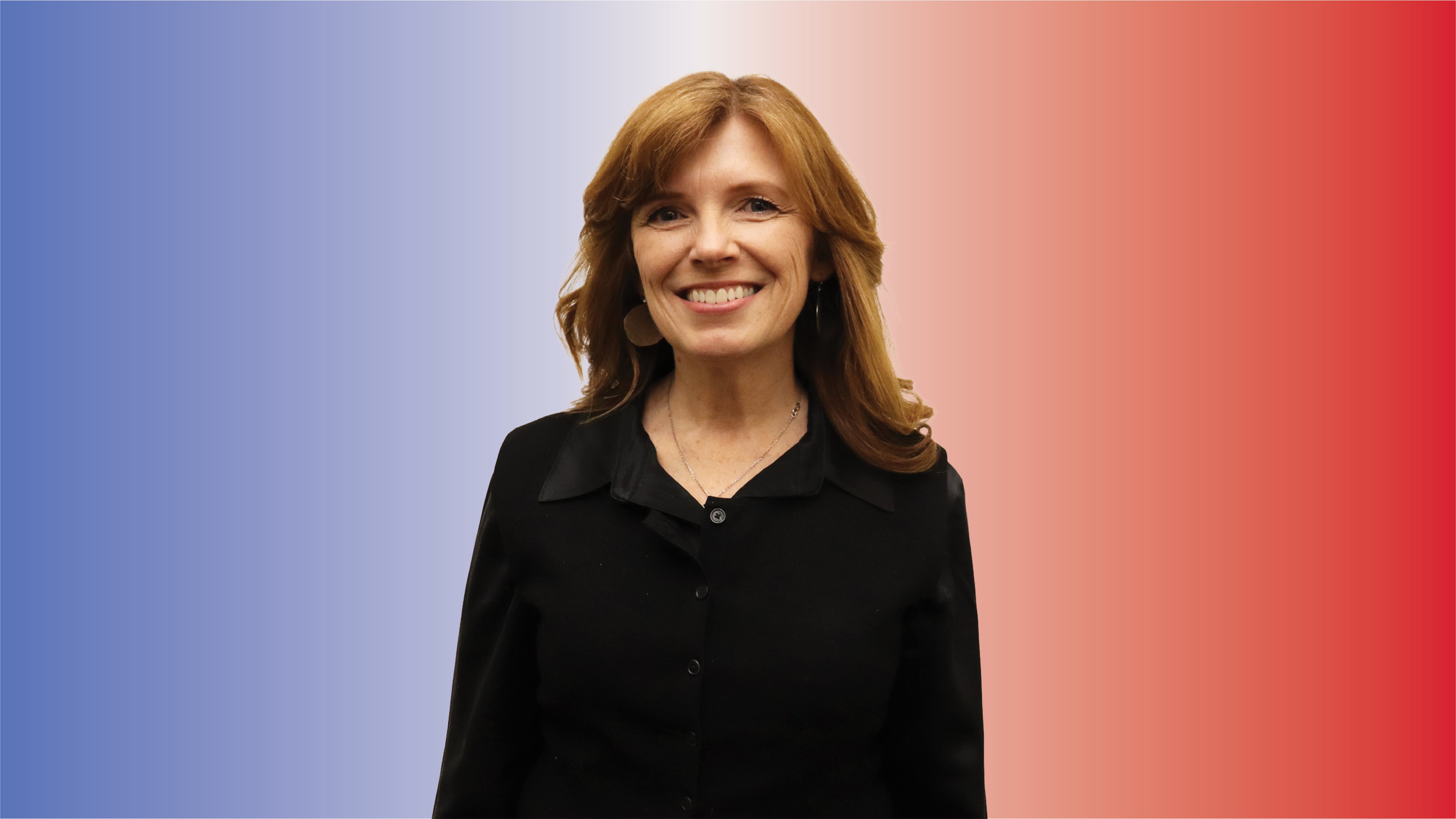
Governor
Christine Drazan
Republican
Sen. Christine Drazan (R-Canby) is correct when she says she’s the only person running in the Republican primary for Oregon governor with the breadth of experience necessary to challenge Gov. Tina Kotek in November.
Drazan lost to Kotek four years ago, and says this run is an extension of what she sought to bring the state last time: a perspective from outside the Portland bubble; better core services that don’t cost more than taxpayers already pay; a long, hard look at our taxation system; and a state that’s more affordable for working-class Oregonians.
Drazan, 53, has served in the state Legislature for seven years: six in the House and less than a year now in the Senate. She’s a canny operator, and one justified knock on her is that she often seems to be angling for her next job, especially if that gig is in Mahonia Hall. When Sen. Daniel Bonham (R-The Dalles) gave up his seat to work in Trump’s Department of Labor, he endorsed Drazan to replace him. County commissioners appointed Drazan to the Senate in 2025—just one week before she announced her second run for governor.
As minority leader in the Oregon House for much of the pandemic era, Drazan led Republican walkouts that made her Public Enemy No. 1 for Democrats. (Public employee unions were so frustrated they struck back with Measure 113, which in theory bounces lawmakers from office if they miss 10 consecutive days.) But she also worked with Democrats to pass some smaller bipartisan legislation around homeless youth, employment benefits, and modest tax relief for seniors. Her biggest policy ambitions have failed to gain traction, though: a needle exchange buffer around schools and a ban on transgender student-athletes in girls sports in K–12 schools.
Drazan and Kotek are longtime nemeses and, if our endorsement interview was any indication, Drazan plans to body the governor this fall. Her critique: Kotek has the wrong goals and can’t figure out how to achieve the goals she has. Crucially, Drazan thinks Kotek has failed to implement outcomes-based expectations for the taxpayer dollars the state gives to nonprofits and other contractors to distribute state services.
“What’s missing right now is a commitment of the government to have standards and metrics and outcomes that you’re actually accountable for,” Drazan told us. “It’s not a resource problem.”
Drazan artfully hedged on questions about Trump’s attacks on the election system. She said the federal government should have no role in Oregon’s election systems, which was a relief to hear as Trump tries to dismantle mail-in voting; but at the same time, Drazan said she didn’t know enough about the feds’ specific request for Oregon’s voting rolls to make a determination whether she would have supported turning them over. We felt that was a cop-out.
The GOP field is crowded—nine candidates appear in the Voters’ Pamphlet. Among the long shots, Brad Peters is an advocate for artificial intelligence, Paul Romero wants to build a pipeline to convey river water to drought-stricken Eastern Oregon, and David Medina was pardoned by Trump for his role in the Jan. 6 insurrection.
Three of Drazan’s rivals merit greater consideration, but none holds a candle to her.
State Rep. Ed Diehl (R-Stayton) has emerged as one of the leading Republicans in the Legislature since 2023. He’s an outspoken Trump supporter and made a name for himself this year when he mounted a rebellion against the Legislature’s transportation funding bill—which would raise the gas tax and vehicle registration fees—by referring the tax hikes to voters. With Diehl as its leader, the grassroots anti-tax campaign collected 250,000 signatures in just 30 days.
While Diehl proved himself worthy of the direct-democracy mantle of Bill Sizemore, he struggled to move past bombast to substantive policy fixes for the state’s most broken systems, including homelessness relief and education. He could name taxes he’s eager to kill (the Corporative Activities Tax, the estate tax) and executive orders he wants to repeal (the Climate Protection Plan), but seemed unwilling to discuss the logical next step: which services he’d cut, or how he’d sustain current services with less revenue.
Perhaps more than anything, though, we dread Diehl’s idea for effectuating his policies if faced with a Democratic legislative majority: He would keep sending his policy ideas to the ballot as chief petitioner. Sure, Arnold Schwarzenegger did it as governor of California, but the initiative system has long been the Golden State’s most contemptible export—outsourcing legislative work to a popularity contest that has grotesquely mutated our tax system. No, thanks.
We thought Danielle Bethell, a Marion County commissioner and co-owner of a family plumbing business, was sharp, had clear policy ideas, and made a fair point that career politicians are doing a lackluster job in the state’s top post. But we’re concerned by an Oregon Government Ethics Commission inquiry into allegations that she used her role as a public official to benefit her children.
And then there’s Chris Dudley, the ex-Trail Blazer and wealth management partner who came close to beating former Gov. John Kitzhaber in the 2010 election. He’s back, 16 years later, with a similar vision: He pledges to run the state like a business. Sounds nice, and Oregon could stand to reevaluate its spending. Dudley scored a $1 million campaign contribution from Nike founder Phil Knight—and proceeded to look like the worst return on investment since Festus Ezeli. He has flip-flopped on abortion, offered no new ideas, and spent much of the time since 2010 residing in San Diego. Earlier this month, he told reporters he never backs down from a fight. But his campaign repeatedly declined to meet with our editorial board, on the grounds that Dudley won’t participate in group interviews. He sure backed down from that fight.
We have plenty of disagreements with Drazan, which we’ll get to hash out in the coming months. But say this for her: She shows up.
Drazan’s biggest kitchen fail: She made a three-ingredient muffin recipe that her daughter sent her from Instagram, and they came out like small stones.
WHAT’S NEXT? The winner of this primary faces Gov. Tina Kotek, who is running with no significant opposition in the Democratic primary.
Labor Commissioner
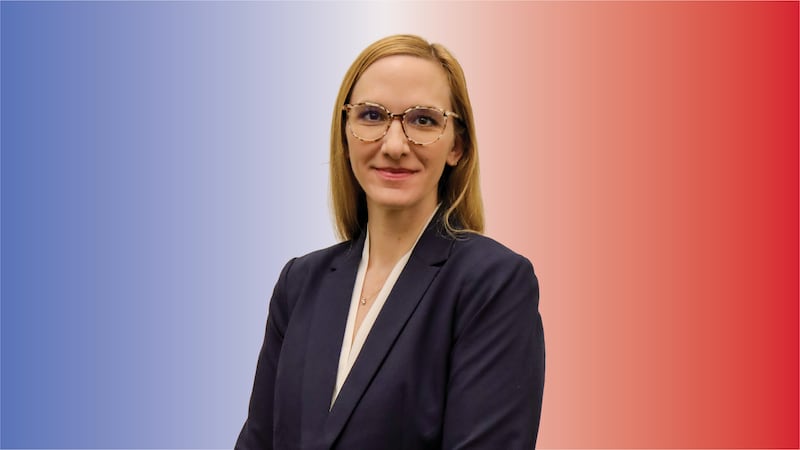
Christina Stephenson
Nonpartisan
Oregon’s Bureau of Labor and Industries is one of several state agencies that regularly get the adjective “troubled” slapped on their name (see also: the troubled Department of Human Services, the troubled Department of Transportation). BOLI is primarily tasked with investigating workers’ claims of wage theft and discrimination, but years of mismanagement starting with Brad Avakian more than a decade ago have left the agency perpetually scrambling to catch up on a backlog of thousands of complaints. It’s also failed to prioritize cases so that larger, more meaningful ones are dealt with first.
We had high hopes for Christina Stephenson when we endorsed her to take the helm of BOLI in 2022. Four years later, we’ve grown disenchanted.
Inheriting an agency left in less than pristine condition by now-U.S. Rep. Val Hoyle (D-Ore.), Stephenson touted her experience as a civil rights lawyer fighting for the little guy. She vowed to decrease the backlog of complaints and said she wanted to see tighter requirements in the workplace to prevent sexual harassment.
But Stephenson has underwhelmed on the job. Stories by the Oregon Journalism Project show she has interpreted prevailing wage law to mandate that contractors pay prevailing, i.e., union, wages on affordable housing projects that would typically be exempt. The result of those rulings has been to jack up the cost of building affordable housing at a time when the state is desperate for more. Critics say she put the desires of trade unions—a major source of her campaign contributions—ahead of Oregon’s most urgent priority. She denies that charge, but even the most charitable reading of her actions says she’s sidestepping a decision between competing ideals of good-paying jobs and getting roofs over Oregonians’ heads.
And it’s unclear just how much Stephenson has decreased the backlog of workplace complaints during her tenure. Stephenson says that since successfully lobbying the Legislature for a 30% increase in BOLI’s budget in 2025 to hire an additional 46 staff (she cites that as her greatest accomplishment in office so far), the agency has managed to reduce the wage-and-hour intake backlog by 20% and reduce the civil rights intake backlog by 38%. She says the agency has entirely eliminated the apprenticeship compliance backlog.
But a November 2025 state audit of BOLI says the agency continues to suffer. People sometimes wait years for resolution to complaints about workplace violations and internal policies, while expectations for investigators are unclear and often nonexistent. And at some point, the audit found, the agency stopped conducting federally required compliance reviews of its apprenticeship program.
Stephenson in WW’s endorsement interview dodged any responsibility for the issues identified in the audit—a pitiful showing. And it felt like her fix for all of the agency’s issues, old and new, is the additional staff BOLI is hiring using the $30 million cash infusion from the Legislature in 2025. More money cannot be an elected official’s only answer to chronic problems.
Stephenson has a challenger who ably outlines all of these problems: Chris Lynch, 61, a longtime civil rights case investigator and then division manager at the agency, who worked under prior labor commissioners and departed shortly after Stephenson took office. We suspect that Lynch, who harbors no political aspirations, would do a capable job with the details of the complaints backlog. But as is often the case with longtime state workers who have soured on elected leaders, Lynch couldn’t quite articulate how he would change the course of a massive agency. His suggested fix to the complaint backlog—being more collaborative with staff—wasn’t inspiring.
We don’t blame anybody who wants to set a new direction at BOLI, but we can’t quite make the leap. We’ll give Stephenson another four years. This time, she’d better deliver.
Stephenson’s biggest kitchen fail: “I have only just recently graduated from eating Taco Bell most of the time to even cooking.”
WHAT’S NEXT? If a candidate gets 50% plus one vote, they assume office Jan. 4. If not, the top two have a runoff in November.
Click here to view all of our May 2026 Endorsements!