Skip to main content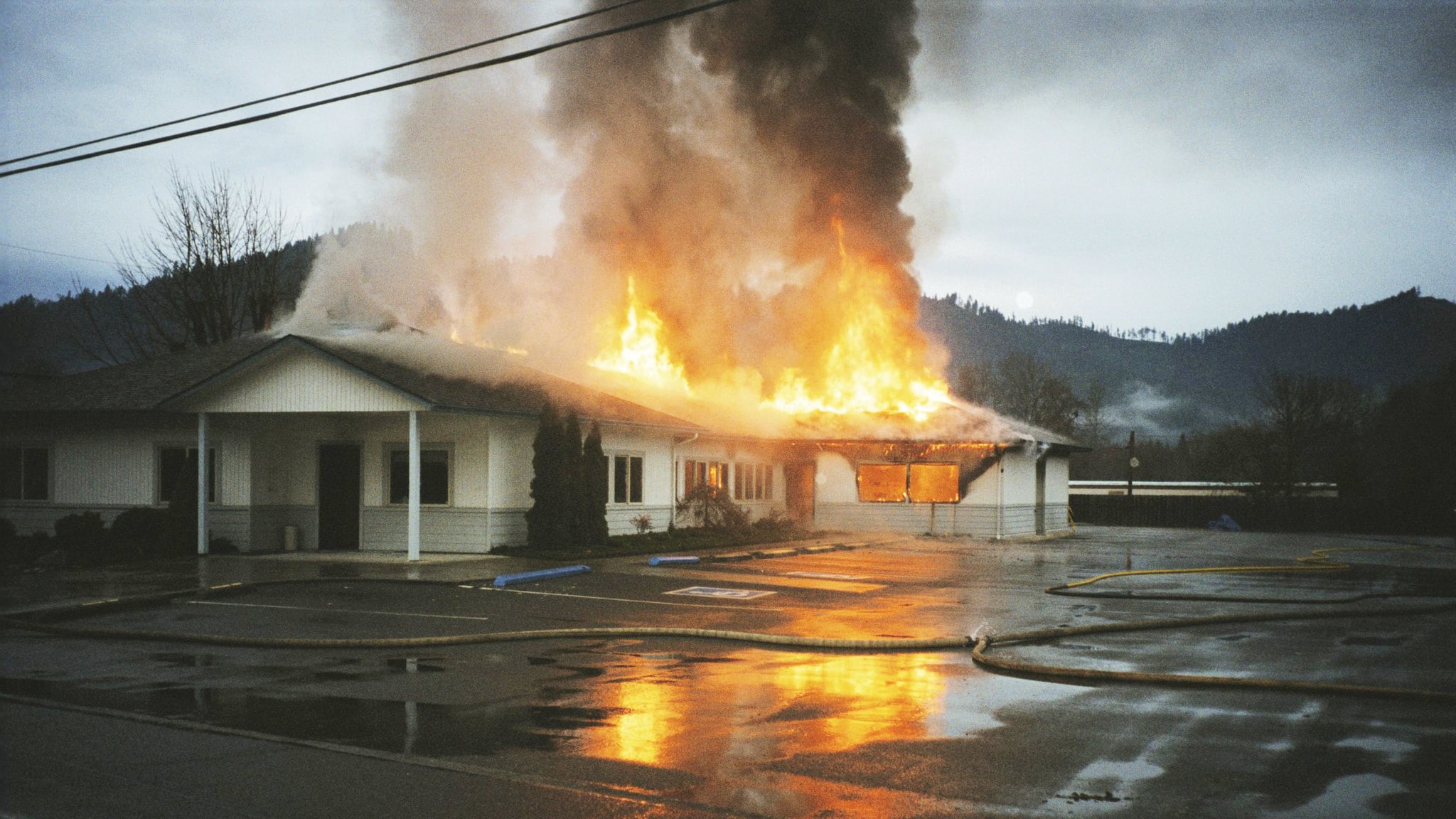
TERRORISTS, NOT SABOTEURS
I was part of the federal team which prosecuted the dozen or so violent defendants you blithely label “saboteurs” in your June 3, 2026, article on the new book Fires in the Night [“Scorched Earth,” WW, June 3]. As found by the court, however, the correct term is “terrorists.” The arsonists used violence against businesses and the government to intimidate them and influence policies and conduct. That’s a textbook definition of terrorism, not some idealistic escapade reminiscent of French Resistance fighters.
A 2006 editorial in The Seattle Times titled “Ecoterrorism Is Real” described similar attempts to “soft-pedal” such heinous conduct as “insulting” toward the ultimate targets, people engaged in lawful activities. U.S. District Judge Ann Aiken recognized this when she applied the terrorism sentencing enhancement to several of the defendants in this case and imposed long prison terms. “It was only dumb luck no one was injured or killed,” she said. In a comparable case which I also prosecuted, U.S. District Judge James Redden in 1995 labeled notorious abortion clinic arsonist Shelley Shannon a “terrorist,” even though no one was injured in her fires.
This prosecution encompassed 20 arsons and related violent crimes (such as toppling high-voltage BPA towers) which occurred from 1996 to 2001. They covered five Western states and caused $40 million in damages. The victims included an auto dealership, a ski resort, a tree farm, timber companies, a university research facility, and a meat wholesaler, among others. Every victim—private and governmental—was terrorized, not sabotaged.
You can say what you want about environmental and animal rights causes, but please don’t romanticize terroristic acts as mere sabotage.
Stephen F. Peifer
Assistant United States Attorney, retired
District of Oregon
DON’T FLEE A GHOST BY TAKING THE HIGHWAY
Joanna Hou’s report on the Sauvie Island cell tower controversy [“Sauvie Island Cellular,” WW, May 20] highlights a textbook case of misplaced public anxiety.
Parent Shanon Melling argues that she may pull her children from the Sauvie Island School to protect a child with a history of neuroinflammation from the “semblance of risk” posed by a Verizon tower. Yet, she won a highly competitive lottery to send her children there, meaning she willingly subjects them to a grueling, two-hour daily round-trip commute down Highway 30.
The mathematical irony here is stunning. To evade a static antenna emitting non-ionizing ambient radio waves at 0.2% of FCC safety limits—waves that medical science consistently shows lack the kinetic energy to trigger cellular damage or inflammatory responses—she forces her children to run a daily gauntlet past massive high-voltage power transmission lines. More critically, she introduces a multihundred-hour annual exposure to a high-speed, heavy-truck transit corridor. Actuarially, this commute exposes her family to a real, quantifiable 1-in-20,000 annual chance of a fatal accident. She is manufacturing a severe physical hazard to flee a biological ghost.
Equally absurd is the neighborhood psychodrama over temporary preconstruction wood stakes on the private property of the Sauvie Island Grange. Activists treat these flagged laths as hostile “intruders.” If local children pull them down, it is simple civil trespass, not a heroic act of eco-defense.
It is time for protesting parents to look at the data and realize that the most dangerous part of their children’s week is the drive to school.
Paul Jared Johnson
Southeast Portland
AU REVOIR, FOIE GRAS
Portland’s restaurant scene is one of the few things this city still enjoys a positive national reputation for. Yet while economic growth, downtown recovery, and public safety remain stubborn challenges, City Council has decided foie gras is the crisis that demands attention [Murmurs, WW, June 3].
The only foie gras I’ve ever eaten was a foie gras bonbon at Naomi Pomeroy’s Beast about 15 years ago. It was unforgettable and is still one of the best things I’ve eaten in my life. Experiences like that helped make Portland a food destination and gave visitors a reason to return. It’s disappointing that a niche special-interest campaign seems to have found a more receptive audience at City Hall than the chefs, restaurants, and hospitality workers who depend on Portland’s food culture for their livelihoods.
At a moment when Portland should be focused on supporting local businesses and rebuilding its economy, City Hall is busy banning a product most residents have never eaten. It’s a perfect example of Portland politics at its worst: symbolic, anti-business, and entirely disconnected from the challenges that matter most.
Ian Scrymgeour
North Portland
THE ELK HAS DIRECTION
The Elk butt is facing east, in the words of Portland City Councilor Dan Ryan, “to signify the Elk’s concern for his herd in the Portland West Hills” [Dialogue, WW, June 3]. Councilor Ryan spoke at the Elk Celebration (April 2026) for the refurbished statue, seriously damaged by protesters in 2020–2021. The Elk has significance to our Indigenous citizens, and Bill Hawkins, architect and historical preservationist; they never gave up on the Elk’s return.
Sonja Grove
Ed.D.
Southeast Portland
Letters to the editor must include the author’s street address and phone number for verification. Letters must be 250 or fewer words. Submit to:
P.O. Box 10770
Portland, OR 97296
Email: amesh@wweek.com